
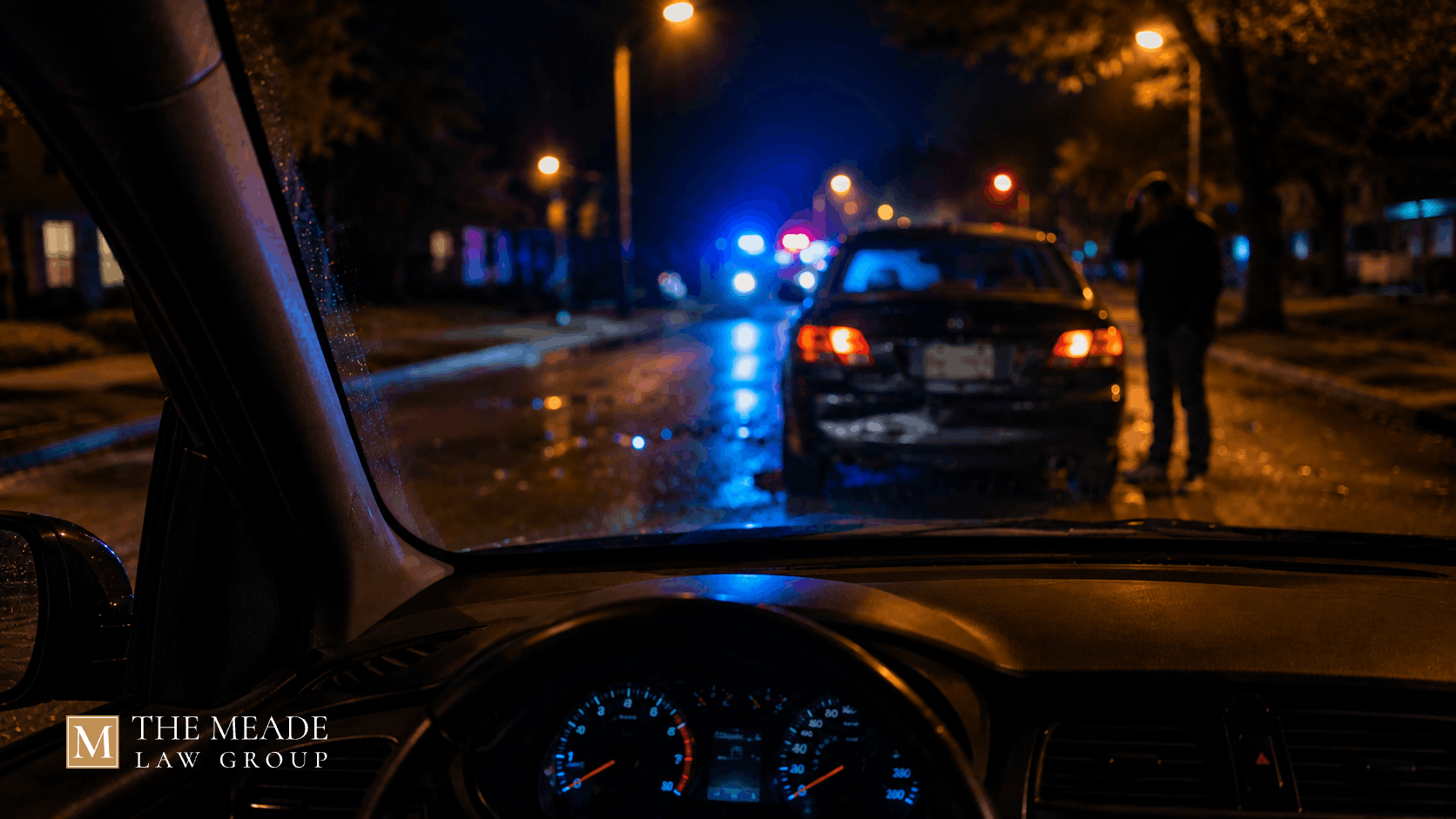
The sound of crunching metal triggers immediate, physiological panic. A driver’s heart rate spikes, judgment clouds, and the instinct to flee overwhelms rational thought. A split-second decision is made to keep driving, followed by a tense glance in the rearview mirror.
Hours later, the adrenaline fades. License plates are captured by intersection cameras, dashcams, and witnesses holding smartphones. Eventually, a police investigator leaves a voicemail, or a citation arrives in the mail demanding a court appearance.
Ohio prosecutes leaving the scene of an accident as a criminal offense rather than a traffic ticket, and a conviction carries a mandatory license suspension alongside a permanent record. That outcome is not predetermined. Prosecutors still bear the burden of proving every element beyond a reasonable doubt.
What “Hit and Run” Actually Means Under Ohio Law
Drivers search using the phrase “hit and run,” but police and courts do not use it. Officers write citations for a hit-and-run or a failure to stop after an accident. Ohio prosecutes this conduct under three separate statutes, and which one applies depends on where the collision happened and what was struck.
| Statute | Where It Applies | What Was Struck |
| ORC 4549.02 | Public roads and highways | A person or another vehicle |
| ORC 4549.021 | Any property other than a public road | A person, vehicle, or property |
| ORC 4549.03 | Real property upon or adjacent to a public road | Buildings, fences, mailboxes, poles |
The law demands affirmative identification, not merely stopping to inspect the damage. A driver must remain at the scene and hand over specific information to any injured person, to the owner or operator of the damaged vehicle, and to any police officer present. If an injured person cannot comprehend it, the driver must instead notify the nearest police authority and wait for an officer.
What has to be handed over is narrow:
- Identity: Full name and current address.
- Vehicle details: The vehicle registration number.
- Ownership: The owner’s name and address, if the driver does not own the car.
- License: Exhibition of a driver’s license, on request and if available.
Is a Hit and Run a Felony in Ohio?
The classification depends entirely on what happened to the people involved. A crash producing only property damage remains a misdemeanor, no matter how expensive the repairs. Once a collision causes injury or death, Ohio hit and run penalties escalate into felony territory.
| Physical Outcome | Driver’s Knowledge | Classification | Prison / Jail | Maximum Fine |
| Property damage only | N/A | First-degree misdemeanor | Up to 180 days | $1,000 |
| Serious physical harm | Did not know | Fifth-degree felony | 6 to 12 months | $2,500 |
| Serious physical harm | Knew | Fourth-degree felony | 6 to 18 months | $5,000 |
| Death | Did not know | Third-degree felony | 9 to 36 months | $10,000 |
| Death | Knew | Second-degree felony | 2 to 8 years (indefinite) | $15,000 |
The mechanism driving this ladder is the driver’s knowledge. A 2016 amendment split each injury tier according to what the driver understood at the moment they left, so an identical accident can produce two different felony degrees.
A driver who strikes a pedestrian at night and flees without registering that the pedestrian suffered broken bones commits a fifth-degree felony. If the state proves the driver saw those injuries first, the same conduct becomes a fourth-degree felony.
The second-degree tier falls under Ohio’s indefinite sentencing framework, the Reagan Tokes Law. The judge sets a minimum term from the two-to-eight-year range, and the maximum is automatically that minimum plus fifty percent.
The Situations That Catch Drivers Off Guard
Most people assume the duty to stop attaches only to a collision with another moving car on a public roadway. That assumption produces a great many hit-and-skip Ohio charges. The duty applies whether or not the other vehicle is occupied, and whether the incident happens on a highway or in a parking lot.
Hitting a Parked Car
Striking an unoccupied vehicle on a public street falls under ORC 4549.02, exactly as though the car had been moving. Because no driver is present to receive the information, the law requires the at-fault driver to attach their name, address, and registration in writing to a conspicuous place on the damaged vehicle.
A note under a windshield wiper is a statutory obligation, not a courtesy. Driving away without leaving one is a first-degree misdemeanor.
Collisions in Parking Lots and on Private Property
Accidents off the public right-of-way are governed by ORC 4549.021, covering commercial parking lots, private driveways, apartment complexes, and any property that is not a public road. It causes property damage, not only to people and vehicles.
A driver who cannot exchange information at the scene is not automatically in violation. The statute allows twenty-four hours to report the collision to the local police department or to the county sheriff outside city limits.
Striking a Fence, Mailbox, or Utility Pole
When a vehicle leaves the road and damages a mailbox, fence, or landscaping, ORC 4549.03 applies. The driver must take reasonable steps to locate the owner, and if a reasonable search fails, must report the damage to law enforcement within that same twenty-four-hour window.
This statute is treated differently from the other two. In State v. Sellers, an Ohio appellate court held that a trial court has no authority to suspend a license following a 4549.03 conviction, because the legislature omitted suspension language from that section. A suspension imposed under it is a defect worth raising on a criminal appeal.
What a Conviction Does to Your Driver’s License
The hit and run license suspension operates separately from jail time and fines. For most clients, it is the penalty that lasts longest, because it reaches employment, childcare, and medical appointments at once.
The Class Five Suspension and the Mandatory Six Months
Convictions under ORC 4549.02 or ORC 4549.021 carry a mandatory class five suspension. The judge must suspend the license for six months to three years, and the statute bars any judge from suspending the first six months of that penalty.
Whether You Can Still Drive to Work or School
Drivers routinely confuse two different judicial powers. A judge cannot waive the opening six months, but the court fully retains authority to grant limited driving privileges during that period.
Neither the hit skip statute prohibits it. A court may authorize driving for occupational, educational, vocational, or medical purposes, setting the permitted times and places. Securing those privileges is often the difference between keeping a job and losing one.
A conviction also triggers consequences at the Ohio Bureau of Motor Vehicles that outlast the criminal case:
- Six points are assessed for a violation of 4549.02 or 4549.021. A violation of 4549.03 carries none.
- Twelve points in any two years trigger a separate BMV suspension, with a warning letter at six.
- Commercial drivers face a one-year CDL disqualification on a first offense and a lifetime disqualification on a second, even if the accident happened in a personal vehicle.
- Insurance carriers typically treat this as a major violation rather than a minor moving violation, producing a far steeper premium increase than the points alone suggest.
Why a Hit and Run Conviction Stays on Your Record for Life
Ohio’s record-sealing law gives most offenders a path to a clean slate, but the legislature excluded convictions under Chapter 4549. A hit and run conviction cannot be sealed or expunged, and State v. Nagle confirmed that courts lack the authority to grant one.
That permanence reaches further than most defendants expect:
- Background checks, where employers read fleeing a scene as an integrity problem rather than a driving problem
- Rental and housing applications
- Professional and occupational licensing boards
- Any role requiring a company vehicle or a clean driving record
- Immigration proceedings
The contrast matters. Charges dismissed outright or ending in acquittal fall under a different provision and remain eligible for sealing. Anyone weighing a quick guilty plea should first understand the expungement process in Ohio and what a plea permanently forecloses.
Charges That Often Come With a Hit and Run
Drivers rarely abandon a fender bender without a reason, and the reason usually generates additional charges once police locate them. Impairment is the most common, which is why prosecutors so often file these citations in pairs.
- OVI under ORC 4511.19: filed when officers reach the driver soon enough to observe impairment, opening a separate fight over field sobriety tests and the procedures that follow an OVI arrest.
- Aggravated vehicular assault: filed where a crash causes serious injury and the driver was impaired, stacking a felony assault on the felony hit skip.
- Driving under suspension: common where the driver fled precisely because their license was already gone.
- Tampering with evidence: a third-degree felony triggered by repairing body damage to conceal involvement.
A companion charge changes the negotiating posture entirely. Prosecutors will sometimes dismiss the hit skip in exchange for a plea on a first-time OVI, or take the opposite trade, depending on which case they can prove.
Can a Hit and Run Charge Be Dropped or Reduced?
Yes. These charges are regularly reduced or dismissed in Ohio courts, though the result turns on weaknesses in the state’s case rather than prosecutorial goodwill. No attorney can promise a particular outcome, and the realistic range looks like this:
| Resolution | When It Becomes Available | What Remains on the Record |
| Dismissal | The state cannot prove who was driving, or cannot prove knowledge | Nothing; the record becomes eligible for sealing |
| Amendment to ORC 4549.03 | The collision involved fixed property, not a person or vehicle | A misdemeanor, but no suspension and no points |
| Plea to a lesser offense | The evidence is weak, and restitution has been paid | A traffic conviction without a mandatory suspension |
Restitution often moves a prosecutor toward an amended charge. A victim’s willingness to let the matter go does not control the state’s decision, but a damaged party already made whole removes the main source of pressure on the prosecutor’s office.
Plea negotiation resolves most of these cases. Where the evidence is thin, an attorney who understands how plea bargains work in Ohio can often negotiate down to reckless operation or failure to control, avoiding the mandatory suspension.
Defenses to a Hit and Run Charge in Ohio
A defense is not the driver’s version of events. It is a targeted demonstration that the state cannot prove one required element: that this defendant operated the vehicle, that a collision occurred, that the defendant knew about it, and that they failed to stop or identify themselves.
- Operation and identity. The state must prove the defendant was driving, not merely that they own the car. A borrowed vehicle, a shared household car, grainy footage, or a partial plate reading all attack this element.
- Knowledge. A driver who never felt or heard the contact cannot be convicted, and clipping a mirror in heavy traffic or backing into a low bollard are situations where that awareness may genuinely not exist. Reaching the higher felony tiers requires separate proof that the driver knew of serious harm.
Procedural challenges run alongside the factual ones. Statements taken during custodial interrogation without a Miranda warning can be suppressed, though a detective’s phone call generally does not qualify as custody. The state must also bring charges within the Ohio statute of limitations, two years for a misdemeanor and six years for a felony, and that clock pauses while a suspect conceals their whereabouts.
One caution belongs here. Attempting to hand information to a driver who then leaves in anger may defeat an element of the offense, but it does not erase the separate duty to report the collision to police.
What to Do If You Have Already Left the Scene
Drivers who realize they made a mistake need a sequence, not a lecture. The instinctive reactions here are almost always the ones that cause the most damage.
- Do not speak to investigators alone: Decline to answer questions and state that you want your lawyer present before any interview.
- Do not repair the vehicle: A trip to a body shop can result in a misdemeanor being upgraded to a felony tampering charge.
- Do not contact the other driver: A private attempt to settle can be characterized as witness intimidation or read as an admission.
- Do not discuss alcohol: If fear of an OVI prompted the decision to leave, never volunteer anything about drinking or about refusing a breathalyzer.
- Retain counsel immediately: An attorney can contact police on your behalf, arrange a safe surrender if a warrant exists, and handle insurance reporting without creating admissions.
Why Choose The Meade Law Group
Defending a failure to stop charge requires an attorney who understands both the evidentiary burden on the prosecutor and the administrative machinery at the BMV.
At The Meade Law Group, we handle these cases across Ohio’s municipal and common pleas courts, and we begin with the state’s assumptions about identity and knowledge, because those are the elements prosecutors most often take for granted.
Our services include:
- Intervening in active investigations before a client speaks to the police
- Challenging the state’s proof of who was driving and what they knew
- Petitioning for limited driving privileges so clients can keep working
- Negotiating amended charges that avoid a permanent failure-to-stop conviction
- Litigating factual defenses at trial where the evidence does not support the charge
Contact The Meade Law Group to schedule a confidential consultation.
Frequently Asked Questions (FAQs)
| Question | Answer |
| How is a hit-and-run handled when the driver is a minor? | The case proceeds in juvenile court, where the emphasis falls on rehabilitation. A juvenile judge still retains authority to impose a license suspension and order detention or community service. |
| Will an out-of-state license be suspended by an Ohio court? | An Ohio judge cannot suspend another state’s license, but can suspend the privilege to drive within Ohio. The conviction is reported home through the Driver’s License Compact, and many states respond with a suspension of their own. |
| What happens at the first court appearance? | The first hearing is an arraignment, where the charge is read and a plea entered. Pleading not guilty triggers discovery, forcing the prosecutor to produce police reports, witness statements, and any camera footage. |
| Do local city ordinances carry different penalties? | Many Ohio municipalities prosecute under their own codes, such as Columbus City Code 2135.12, which generally mirror the state penalty and suspension. Those ordinances direct that collisions involving serious harm or death be prosecuted as felonies under state law instead. |
| Can the criminal court order payment for the other driver’s damage? | Yes. A defendant who cannot give the court proof of financial responsibility may be ordered to pay up to $5,000 in restitution for economic loss, independent of any civil claim. |
| What happens to the insurance claim while the case is pending? | The civil claim and the criminal case run on separate tracks and timelines. Statements made to an insurer can be obtained by the prosecution, so reporting should be coordinated through counsel. |