
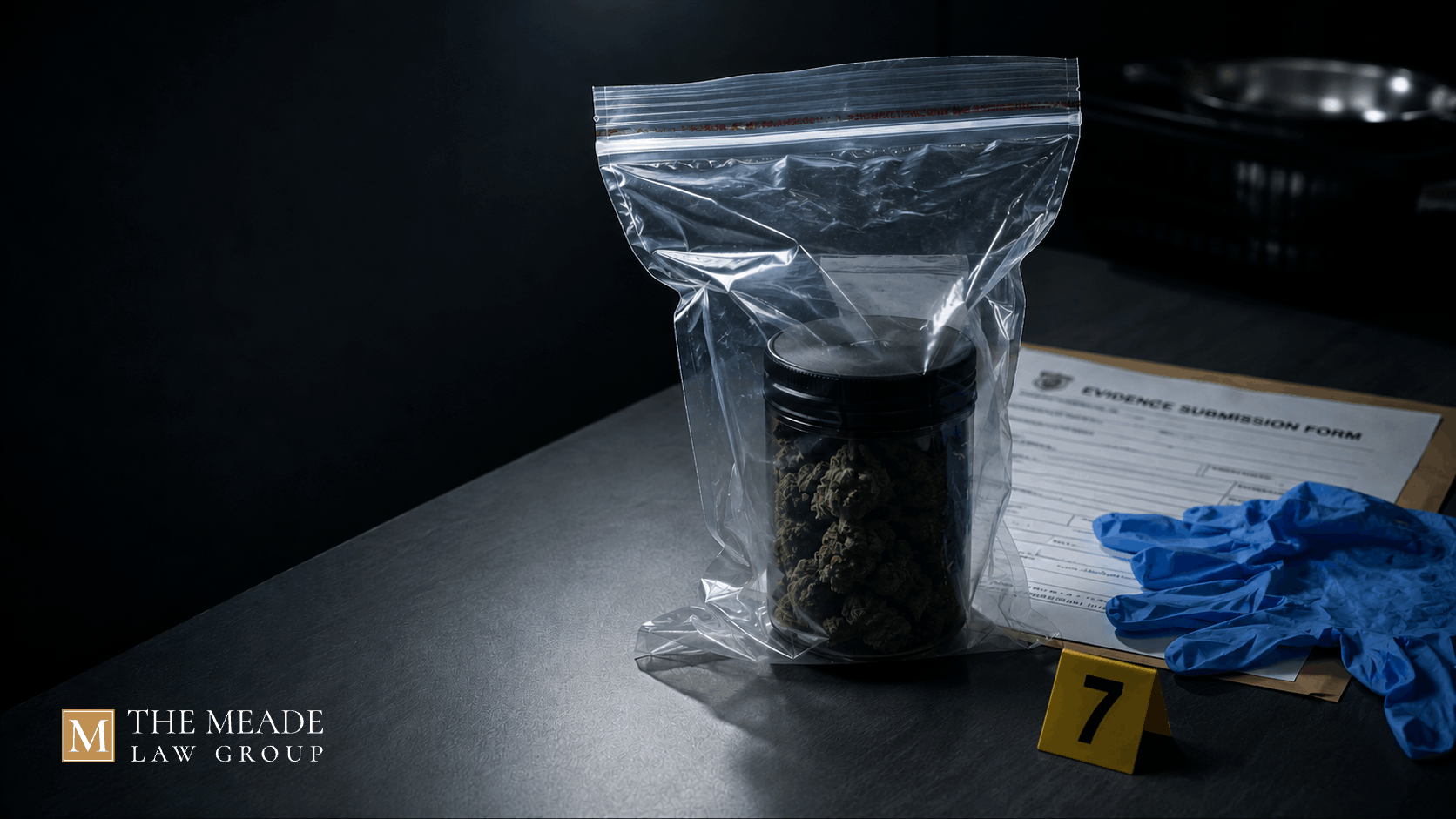
Imagine it is a Friday evening. You are driving home, and sitting in your center console is a legally purchased, but opened package of cannabis gummies from earlier in the week. A few miles down the road, you are pulled over for a broken taillight. Under the rules voters passed a few years ago, you might assume you have nothing to worry about. But under the current law, that opened container can quietly turn an ordinary traffic stop into a criminal citation.
When voters approved recreational cannabis, many believed marijuana prosecutions were over. Instead, a complex regulatory system followed. If you are wondering if marijuana is legal in Ohio, the answer is yes, but with unforgiving boundaries that frequently catch well-meaning citizens off guard.
Ohio marijuana laws in 2026 look different from what voters initially passed. New legislation shifted the focus from how much you possess to where you bought it, how you transport it, and what kind of packaging it sits in. This guide breaks down the current legal landscape, what can still get you charged, and how our defense attorneys can help protect your future.
How Ohio Got Here: From Issue 2 to Senate Bill 56
To understand the current rules, you have to look at how Ohio cannabis laws evolved. The state went from a citizen-led legalization effort to a legislative crackdown in just a few years.
On November 7, 2023, Ohio voters passed Issue 2, which legalized adult-use marijuana and created Ohio Revised Code (ORC) Chapter 3780. While this initial framework was broad and permissive, lawmakers soon raised concerns about public safety and youth access. On December 19, 2025, Governor DeWine signed Senate Bill 56 into law. Taking effect on March 20, 2026, this legislation repealed the voter-approved chapter and moved adult-use cannabis into ORC Chapter 3796, overseen by the Division of Cannabis Control.
| Feature | Under Issue 2 (Late 2023–Early 2026) | Under Senate Bill 56 (March 2026–Present) |
| Sourcing | Implicitly allowed out-of-state purchases. | Strict provenance: Must be from an Ohio dispensary or legal Ohio home grow. |
| Potency | Extracts capped at 90% THC. | Extracts capped at 70% THC; plant material at 35%. |
| Delta-8 / Hemp | Widely available at gas stations and convenience stores. | Intoxicating hemp is banned outside of licensed, regulated dispensaries. |
What Is Still Legal for Adults 21 and Older
Despite the legislative changes, the core right established by voters remains intact. Under Ohio’s rules for recreational marijuana, adults 21 and older may still possess, grow, and share cannabis, provided they stay within statutory limits.
If you are 21 or older, your legal protections depend on abiding by two primary sets of rules: how much you carry and how you cultivate it.
Possession Limits: Flower vs. Extract
Ohio law separates raw plant material from concentrated extracts because of the difference in potency. For personal use, an adult may legally possess:
- Up to 2.5 ounces of plant material (flower).
- Up to 15 grams of marijuana extract or concentrates.
As long as you remain under these thresholds and acquire the product lawfully, you are operating within the bounds of the law.
Home Grow Limits and Sharing Rules
If you prefer to cultivate your own cannabis, how many marijuana plants can you grow in Ohio depends on who lives in your home. The law allows:
- Up to 6 plants per adult.
- A maximum of 12 plants per household, regardless of how many adults live there.
Your grow area must be secured against access by anyone under 21, and the plants cannot be visible from a public place.
Ohio also allows you to share homegrown cannabis with another adult aged 21 or older. This transfer must happen at a private residence and must be free. Exchanging money, services, or any other compensation turns a legal transfer into a trafficking offense.
Out-of-State Marijuana Is Now Illegal to Possess
One of the most consequential changes under Senate Bill 56 is the new sourcing rule. Previously, law enforcement was primarily concerned with the weight of the marijuana. Today, legality is tied directly to the product’s origin.
Your cannabis must come from either a licensed Ohio dispensary or a lawful Ohio home grow. Any out-of-state marijuana is classified as illegal contraband. For example, if you live near the border and purchase cannabis at a licensed Michigan dispensary, bringing that product back into Ohio is a crime.
No other legal-cannabis state imposes a sourcing rule this strict. If police discover marijuana in your possession and the packaging traces back to another state, you can be charged with a criminal offense, even if the amount is well under the 2.5-ounce limit.
The New Transportation and Packaging Rules
How you carry marijuana in your car is regulated much like alcohol. The marijuana transportation laws Ohio enforces today essentially mirror the state’s open-container rules.
Ohio now treats an open cannabis container much like an open bottle of alcohol. To stay compliant while driving, keep these storage rules in mind:
- Keep unopened products in their original, sealed packaging.
- Once the seal is broken, move the product to the trunk.
- If your vehicle has no trunk, store it behind the last upright seat, out of the driver’s reach.
Failing to properly secure your cannabis in a vehicle is a minor misdemeanor, punishable by a fine of up to $150. An improperly stored container can also give an officer a reason to investigate further.
Where You Can (and Can’t) Use Marijuana
Legalization does not mean you can use cannabis wherever you please. Under current Ohio marijuana laws, consumption is confined to private property and only with the property owner’s permission.
Public consumption of any kind is prohibited. Whether you are smoking a joint on a public sidewalk, using a vape pen outside a restaurant, or eating a THC gummy at a city park, you are committing a minor misdemeanor.
The state is vigilant regarding consumption inside motor vehicles. Even if the car is parked, smoking or vaporizing cannabis inside a vehicle on public roadways is illegal. If a passenger smokes or vapes marijuana while the vehicle is in motion, that passenger commits a third-degree misdemeanor, and the driver will likely be subjected to an impaired driving investigation.
Potency Caps, Edibles, and Intoxicating Hemp
Lawmakers used Senate Bill 56 to rein in the strength of cannabis products and keep them out of the hands of children. These regulations dictate exactly what can be manufactured and sold within the state.
Lower THC Potency Limits
The state lowered the permissible strength of legally sold cannabis to mitigate public health concerns. Currently, marijuana extracts and concentrates are capped at 70% THC (down from the previous 90% limit). Raw plant material (flower) is capped at a maximum of 35% THC. Any product exceeding these limits is not lawful adult-use marijuana.
Edible Limits and Child-Safe Packaging
Edibles face specific dosage and design constraints. Recreational edibles are limited to 10 milligrams of THC per serving and 100 milligrams of THC per entire package.
To prevent accidental ingestion by minors, the law requires child-resistant packaging. Furthermore, it is illegal to manufacture or sell edibles shaped like animals, fruit, cartoon characters, or anything else that resembles candy or appeals to children.
The Ban on Intoxicating Hemp and Delta-8
Before 2026, intoxicating hemp products like Delta-8 THC were easily found at local gas stations, convenience stores, and vape shops. Senate Bill 56 closed this loophole.
Today, any product containing an intoxicating level of hemp or THC, including THC-infused beverages, may only be sold through licensed Ohio cannabis dispensaries. The state capped the number of licensed dispensaries at 400 statewide, and local municipal governments retain the authority to ban dispensaries from operating within their city limits.
Marijuana Offenses That Remain Serious Crimes
Legalization removed the criminal penalties for simple, low-level possession, but it did not grant immunity for all cannabis-related conduct. Police and prosecutors continue to target behavior that endangers the public or involves minors.
Marijuana OVI: Driving While Impaired
Legalization did nothing to soften Ohio’s stance on impaired driving. A marijuana OVI remains a serious, separately prosecuted criminal offense.
Unlike alcohol, where impairment is generally judged by a .08 blood alcohol content, Ohio uses “per se” limits for THC in your bloodstream or urine. Because THC metabolites can linger in your system for days or weeks after use, you can potentially be charged with an OVI long after the intoxicating effects have worn off. If you are facing impaired driving allegations, seeking an OVI/DUI defense attorney is critical to protecting your driver’s license and your freedom.
Underage Possession, Fake IDs, and Unlicensed Sales
The state penalizes anyone who subverts the regulated market or involves individuals under the age of 21.
- Underage Distribution: Distributing adult-use or homegrown marijuana to someone under 21 is a first-degree misdemeanor. A subsequent offense escalates to a fifth-degree felony.
- Fake IDs: Using a false or altered identification card to purchase cannabis is a first-degree misdemeanor.
- Solicitation: Asking or soliciting another person to buy marijuana on your behalf is a fourth-degree misdemeanor (and a second-degree misdemeanor if you have a prior conviction).
- Unlicensed Sales: Selling marijuana without a state-issued dispensary license is prosecuted under Ohio’s criminal trafficking statutes.
Penalties for Marijuana Violations in Ohio
While minor rule-breaking generally results in fines, possessing cannabis in large quantities remains a felony. Under Ohio Revised Code 2925.11, the penalties scale based on the weight of the drugs involved, following the same felony drug charge structure used across Ohio controlled-substance cases.
The table below demonstrates the specific criminal consequences if you are caught violating possession or cultivation limits.
| Offense | How It Is Charged | Potential Penalty |
| Possession over 2.5 oz but < 100 grams (or any possession under age 21) | Minor Misdemeanor | Up to a $150 fine (No jail time) |
| Possession of 100 to < 200 grams | Fourth-Degree Misdemeanor | Up to 30 days in jail |
| Possession of 200 to < 1,000 grams | Fifth-Degree Felony | Felony prison term |
| Possession of 1,000 to < 5,000 grams | Third-Degree Felony | Felony prison term |
| Cultivation Over the Limit (Even by one plant) | Illegal Cultivation of Marijuana | Scales by weight (Ranges from Minor Misdemeanor to Felony) |
Can You Clear a Past Marijuana Conviction in Ohio?
If you have an old cannabis conviction holding you back from employment or housing, Senate Bill 56 created a specific legal pathway (R.C. 2953.321) to expunge a marijuana conviction in Ohio.
This pathway allows individuals to apply for the expungement of certain prior marijuana and hashish possession offenses, including hashish offenses involving 15 grams or less, provided the conviction occurred before the new law’s effective date. When a judge grants this expungement, the legal system treats the prior proceeding as if it never occurred. Your record is wiped clean, allowing you to confidently state on job applications that you do not have a drug conviction.
What to Do If You’re Charged with a Marijuana Offense
If you are pulled over, cited, or arrested for a cannabis-related offense, follow these essential steps:
- Exercise your right to remain silent: Do not try to talk your way out of a citation. Admitting where you bought the marijuana or how much you smoked gives police the evidence they need.
- Do not consent to a vehicle search: If police ask to search your car, politely decline. Force them to obtain a warrant or establish probable cause.
- Preserve your evidence: If you have dispensary receipts, original child-safe packaging, or photographs of your home grow setup, keep them safe. This documentation is vital to proving lawful sourcing.
- Contact a defense attorney immediately: Drug charges move quickly. You need an advocate to step between you and the prosecution before formal charges are filed.
Why Choose The Meade Law Group
Facing a marijuana charge in Ohio is a high-stakes situation, and the line between a legal recreational activity and a felony drug charge has never been thinner. At The Meade Law Group, we understand the nuances of Senate Bill 56 and how prosecutors build their cases against everyday citizens.
Our team brings a former prosecutor’s perspective to Ohio drug charge defense and is familiar with the procedures of local courts throughout Columbus, Franklin County, Delaware County, and Fairfield County. We focus on protecting your rights, challenging the evidence-gathering process, and shielding you from overcharging.
Our Services Include:
- Drug charge and possession defense: Scrutinizing how the evidence was obtained and how the substance was weighed and classified.
- Illegal search and seizure motions: Moving to suppress evidence that resulted from an unlawful traffic stop or vehicle search.
- Marijuana OVI defense: Contesting “per se” THC testing and impaired-driving allegations that threaten your license.
- Record expungement: Pursuing relief under Ohio’s new pathway to clear qualifying past marijuana convictions.
Contact The Meade Law Group to schedule a confidential consultation.
Frequently Asked Questions (FAQs)
| Question | Answer |
| Do medical marijuana patients have any advantages under the new laws? | Yes. Medical marijuana patients retain significant advantages under Ohio law. They are permitted access to higher-potency cannabis products, higher THC limits in edibles, greater daily purchase allowances, and are eligible for home delivery from dispensaries. |
| Can my landlord evict me for smoking legal marijuana in my apartment? | Yes. Even though adult-use possession is legal statewide, Ohio law protects the rights of property owners. Landlords can legally write lease agreements that prohibit the cultivation, smoking, or vaporization of marijuana on their property. |
| If I use marijuana legally on the weekend, can I be fired from my job? | Yes. Legalization does not override workplace policies. Ohio employers maintain the right to enforce zero-tolerance drug-free workplace policies, and a termination for violating one may also disqualify you from receiving unemployment benefits. |
| Can I carry legally purchased Ohio marijuana into a national park? | No. National parks, federal courthouses, and military bases fall under federal jurisdiction. Because cannabis remains a Schedule I controlled substance federally, possessing it on federal land is a crime regardless of Ohio’s state laws. |