Seeing flashing red and blue lights in your rearview mirror instantly triggers a spike of anxiety, especially when a routine traffic stop escalates, and an officer asks you to step out of your vehicle. If the officer suspects you have been drinking, they will inevitably ask you to blow into a machine. In that high-pressure, split-second moment, you have to make a choice.
A common and dangerous misconception is that saying “no” to a breath test is always the smartest move. Many people mistakenly believe that by withholding a breath sample, they are depriving the police of evidence and effectively beating the system.
The reality is far more complicated. Ohio lawmakers have designed the system to severely punish drivers who decline chemical testing, triggering immediate penalties that can sometimes outweigh the consequences of taking the test and failing. Understanding how the state penalizes a refusal is your best defense against a panicked decision that follows you for years.
Ohio’s Implied Consent Law, Explained
To understand why a simple refusal carries such heavy penalties, you first have to understand the legal agreement you made when you got your driver’s license. The state enforces this bargain through its implied consent statutes.
What “Implied Consent” Actually Means
Under Ohio Revised Code 4511.191, anyone who drives on Ohio roads has implicitly given their consent to a chemical test of their breath, blood, or urine to determine alcohol or drug content. This obligation does not apply to every random traffic stop, though. Implied consent only activates after an officer has lawfully arrested you for an OVI (Operating a Vehicle Under the Influence). Once you are under arrest, the state treats your compliance as a mandatory condition of keeping your driving privileges.
The Warning the Officer Must Read to You
Because the penalties for breaking this implied agreement are so severe, police cannot simply demand a test and suspend your license in secret. Under ORC 4511.192, the arresting officer is legally required to read you a highly specific statutory warning before requesting the official chemical test.
They must read it from an official BMV Form 2255, spelling out exactly how long your license will be suspended if you refuse. If the officer fails to read this warning or reads it incorrectly, your defense attorney can use that error to fight your suspension in court.
Can You Legally Refuse a Breathalyzer in Ohio?
If you are wondering whether you can refuse a breathalyzer in Ohio, the answer is a clear yes: you always have the physical right to refuse to blow into a machine. The legal consequences, however, depend entirely on when the officer asks you to do it. The key is understanding the difference between the two distinct types of breath tests used during an investigation.
| Factor | Roadside PBT (Before Arrest) | Chemical Test (After Arrest) |
| When it’s requested | On the side of the road, during the stop | At the station, after a lawful OVI arrest |
| Does implied consent apply? | No | Yes |
| Penalty for refusing? | None | Immediate license suspension (ALS) |
The Roadside Portable Breath Test (PBT)
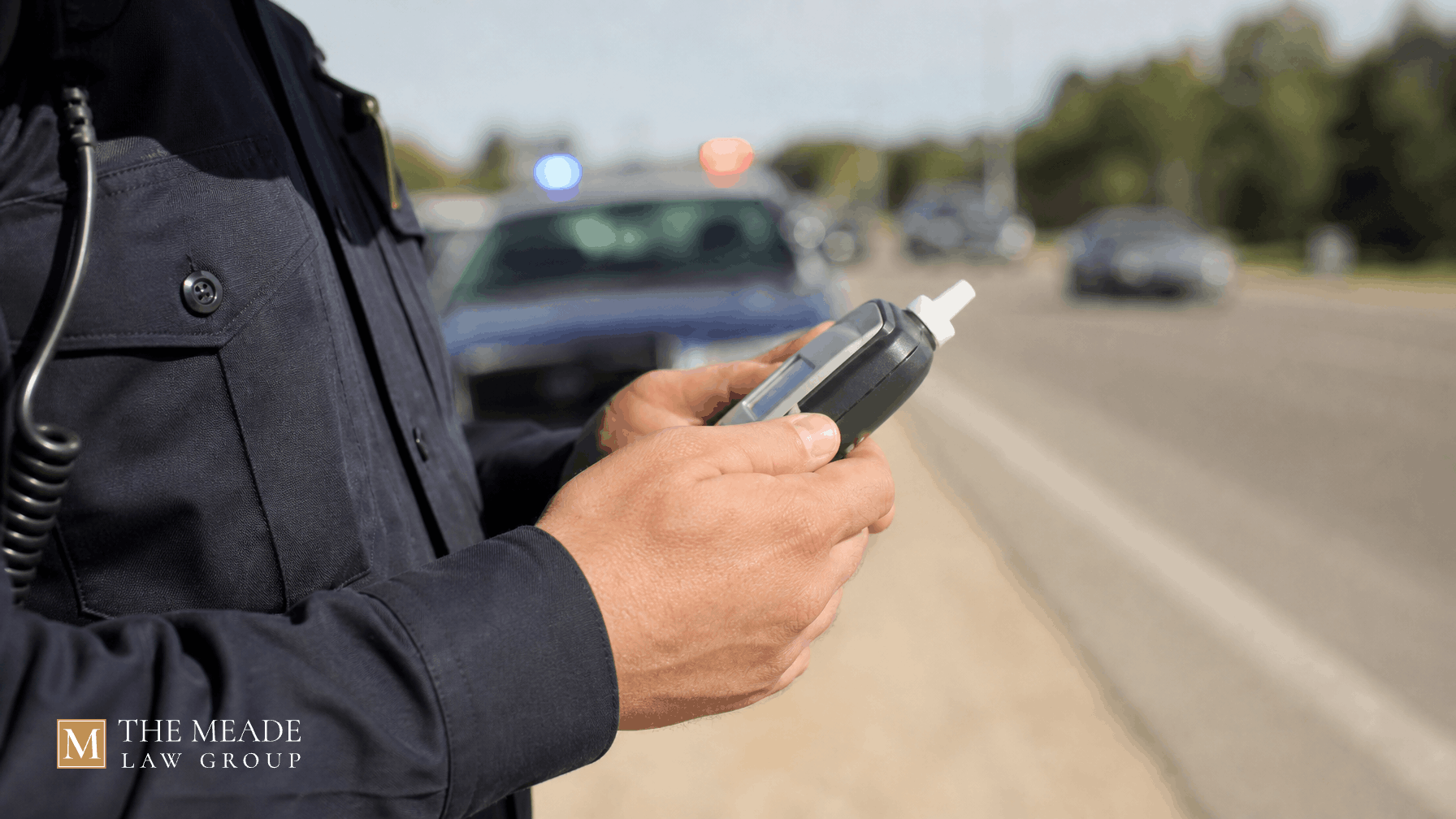
If you are still standing on the side of the highway and the officer asks you to blow into a small, handheld device, that is a Portable Breath Test (PBT). You can absolutely refuse a breathalyzer during a traffic stop when it is this roadside PBT. Because you have not yet been arrested, implied consent does not apply. These handheld devices are notoriously unreliable, and refusing this preliminary test carries no automatic license suspension and no direct legal penalty.
The Chemical Test After Arrest
Everything changes once the officer places you in handcuffs, puts you in the cruiser, and officially arrests you for OVI. The official breathalyzer machine at the police station is an evidentiary test, and this is the test governed by implied consent. If you refuse this official, post-arrest chemical test, you immediately trigger state-mandated penalties against your driver’s license.
What Happens If You Refuse a Breathalyzer in Ohio?
If you decline the official post-arrest chemical test, the officer will immediately confiscate your license and impose an Administrative License Suspension (ALS) on behalf of the Ohio Bureau of Motor Vehicles (BMV). This suspension takes effect right then and there.
The length depends on your prior record, looking back over the last 10 years. (This 10-year window applies strictly to the administrative suspension, which is separate from any criminal penalties.) On top of that, Ohio law mandates a “hard time” period at the start of your suspension. During a hard time, a judge is legally forbidden from granting you limited driving privileges for any reason, including work or school.
| Prior Refusals or OVI Convictions (Within 10 Years) | Length of ALS Suspension | Mandatory “Hard Time” (No Driving) |
| First Refusal | 1 Year | 30 Days |
| Second Refusal | 2 Years | 90 Days |
| Third Refusal | 3 Years | 1 Year |
| Fourth or More Refusals | 5 Years | 3 Years |
Crucially, the ALS is a civil penalty administered by the BMV, making it completely separate from your criminal OVI case. Even if your criminal charges are later reduced or dismissed, the refusal suspension remains on your record unless your attorney successfully appeals the ALS itself. The officer will hand you a copy of the BMV Form 2255, which serves as both your official notice of suspension and a brief temporary permit to get home.
Refusing a Breath Test Won’t Save You From an OVI Charge
Many people assume that without a breathalyzer printout, the prosecutor has no case. This is false. When people ask what happens if you refuse a breathalyzer in Ohio, they often forget that the state simply builds its case around different evidence.
Even without a chemical test, you can still be convicted of an OVI based on:
- The officer’s observations: Testimony about the smell of alcohol, slurred speech, bloodshot eyes, or erratic driving.
- Video evidence: Dashcam and bodycam footage showing your behavior, coordination, and demeanor during the stop.
- Field sobriety tests: How you performed on the roadside balancing and eye-tracking exercises (read our detailed guide on challenging field sobriety tests in Ohio to learn more).
- Consciousness of guilt: Ohio law explicitly allows prosecutors to tell the jury that you refused. The state will argue your refusal is proof you knew you were intoxicated and were trying to hide it.
A refusal is also not an impenetrable shield against chemical testing. If police strongly suspect you are impaired, they can contact an on-call judge to secure a search warrant. Once a judge signs it, officers can legally compel a blood draw, entirely bypassing your refusal.
When Refusing Becomes a Separate Crime
In most situations, refusing a breathalyzer test results in a civil license suspension, not an additional criminal charge. But Ohio enforces a severe penalty enhancement for repeat offenders.
Under ORC 4511.19(A)(2), if you have a prior OVI conviction within the past 20 years (a distinct, longer timeline than the 10-year administrative lookback) and you refuse the chemical test on a new arrest, that refusal becomes its own criminal offense. You are charged with the OVI and a separate OVI Refusal charge. If convicted of that refusal charge, Ohio law doubles your mandatory minimum jail sentence.
Should You Refuse a Breathalyzer? The Honest Answer
Drivers frequently ask attorneys whether there are good reasons to refuse a breathalyzer. Because every case is unique, no ethical attorney can offer a blanket “always refuse” or “never refuse” rule. Whether you should refuse a breathalyzer depends heavily on your prior record and the specific circumstances of your arrest.
That said, the math behind Ohio’s suspension laws often surprises people – and shows why refusing is not the foolproof strategy it appears to be.
When Refusing Can Hurt You More
Consider a first-time offender with a clean record:
- If you take the test and fail (registering at or above the 0.08% legal limit), the BMV imposes a 90-day Administrative License Suspension.
- If you refuse the test, the BMV imposes a full 1-year Administrative License Suspension, plus a 30-day hard-time period during which you cannot drive for any reason.
By trying to withhold evidence, a first-time offender trades a 90-day suspension for a full year off the road. You have to weigh the benefit of denying the prosecutor a concrete BAC number against the reality of losing your license for twelve months.
What to Do If You’ve Already Refused a Breath Test
If you have already declined the test and the officer handed you a suspension form, the clock is ticking. Protecting your driving privileges requires immediate action. Follow these steps:
- Do not drive once the temporary permit expires. Driving under an active ALS is a serious criminal offense that can lead to jail time and vehicle impoundment.
- Stay completely silent. Do not call the station to argue your case, and do not post about the arrest on social media. Prosecutors can and will use your statements against you.
- Act before the 30-day deadline. You have a limited window to formally appeal the suspension – generally at or before your initial court appearance (often within days of arrest) and no later than 30 days after the incident.
- Hire defense counsel immediately. Challenging a refusal suspension is a highly technical process that requires an attorney to scrutinize the officer’s paperwork and bodycam footage for statutory errors.
How a Columbus OVI Attorney Can Challenge Your Refusal
A skilled defense attorney does not simply accept the officer’s version of events. Instead, they attack the foundation of the state’s case from two distinct angles: fighting the criminal OVI charge and appealing the civil ALS suspension.
Challenging the Traffic Stop and Arrest
Before implied consent even applies, the officer must have followed the Constitution. Your attorney scrutinizes the dashcam video to determine whether the officer had reasonable suspicion to pull you over and probable cause to make the arrest. If the initial stop was unlawful, everything gathered afterward, including the refusal, can be thrown out of court.
Challenging the ALS Itself
Under ORC 4511.197, your attorney can file a formal appeal to overturn the BMV suspension by cross-examining the arresting officer and reviewing the paperwork to prove that:
- The officer did not have reasonable grounds to arrest you.
- The officer never formally placed you under arrest before requesting the test.
- The officer failed to read the mandatory BMV Form 2255 warning word-for-word.
- You did not actually refuse – for example, a medical condition such as asthma prevented you from providing enough breath volume, which the machine wrongly recorded as a refusal.
Why Choose The Meade Law Group
An OVI arrest and a one-year license suspension threaten your ability to earn a living and care for your family. You need an advocate who understands the tactics used by Central Ohio prosecutors and knows exactly how to dismantle their evidence.
At The Meade Law Group, we bring decades of disciplined, focused criminal defense experience to clients throughout Columbus and Franklin County. Our approach to OVI cases is meticulous and strategic, and when you hire us, we take immediate action to protect you:
- Filing rapid ALS appeals: We move quickly to challenge your BMV suspension and file motions to restore your driving privileges so you can get back to work.
- Conducting deep evidence review: We subpoena and comb through every second of bodycam and dashcam footage to expose constitutional violations and officer errors.
- Negotiating actively: We leverage weaknesses in the state’s case to seek dismissals or significant reductions in your charges.
- Litigating relentlessly: If a fair resolution cannot be reached, we build a rigorous defense and fight for your freedom at trial.
Contact The Meade Law Group to schedule a confidential consultation.
Frequently Asked Questions (FAQs)
| Question | Answer |
| If I stay completely silent, does that count as refusing the breathalyzer? | Yes. Ohio law does not require you to verbally say “no.” If you remain silent, repeatedly ask unrelated questions, or fail to blow hard enough into the machine, the officer will record it as a refusal, triggering the automatic license suspension. |
| What happens to my Commercial Driver’s License (CDL) if I refuse? | The penalties for commercial drivers are exceptionally harsh. If you hold a CDL and refuse a chemical test, you face a mandatory one-year disqualification of your CDL, even if you were driving your personal car off the clock at the time. |
| I have an out-of-state license. Does Ohio’s refusal suspension apply to me? | Yes. While Ohio cannot seize a license issued by another state, the BMV will immediately suspend your right to drive within Ohio’s borders. Ohio will also report the refusal to your home state, which will likely impose its own suspension against your actual license. |
| Does an ALS for refusing a breathalyzer raise my car insurance rates? | Almost always. To reinstate your driving privileges or obtain limited work privileges, the state usually requires you to carry an SR-22 bond. This certificate of high-risk insurance flags the OVI incident to your provider, leading to significant premium increases. |
| Can a refusal suspension be removed from my driving record later? | An ALS cannot be cleared through standard record sealing or expungement. The only ways to remove it are for your attorney to win an ALS appeal in court or to negotiate termination of the ALS as part of a plea agreement with the prosecutor. |
| If my car is towed after I refuse, how do I get it back? | You must go to the impound lot and pay all towing and daily storage fees out of pocket. Because your license is suspended, you will need to bring a validly licensed driver to move the vehicle, along with proof of ownership and current insurance. |