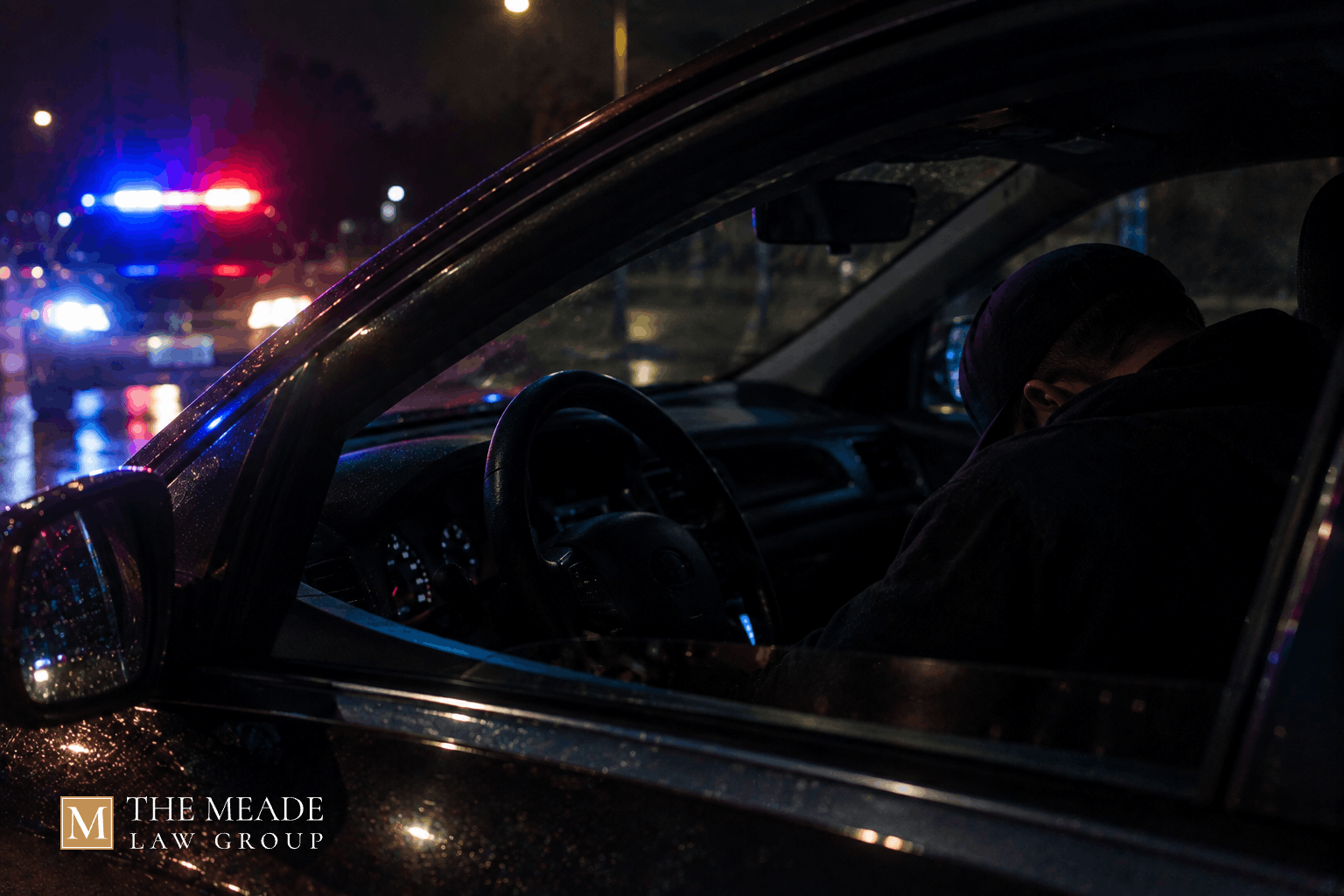

Flashing lights fill the mirror, a citation comes through the window, and a court date is printed at the bottom. It has the look of an ordinary traffic ticket, the kind you pay online and forget about by the weekend. Reckless operation is not that.
Behind the plain-sounding name sits a criminal charge that can add points to your license, raise your insurance for years, and, on repeat offenses, carry jail time. It also leads to a second, very different life. It is one of the most common charges an OVI gets reduced to, which makes it a threat to some drivers and a lifeline to others.
If you were cited for reckless operation in Ohio, or you are hoping to have an OVI reduced to it, understanding how the charge actually works is the first step toward the outcome you want.
What Is Reckless Operation in Ohio?
Reckless operation is defined in ORC 4511.20. The law makes it illegal to operate a vehicle on any street or highway in willful or wanton disregard of the safety of persons or property. The statute lists no specific banned maneuvers, and that is intentional. It is written broadly so it can reach any driving that shows genuine indifference to safety rather than an honest mistake.
That breadth gives officers and prosecutors wide discretion over when to file the charge. Conduct that commonly leads to it includes excessive speeding, weaving through traffic, street racing, and stunt or “takeover” driving.
What “Willful or Wanton Disregard” Actually Means
This phrase is the heart of the charge, and it sets a higher bar than everyday carelessness. Willful or wanton disregard describes driving that reflects a conscious indifference to a known risk, not a momentary lapse.
A single mistake, a brief drift across a line, or a good-faith misjudgment usually falls short of that standard. Because the line is subjective, whether your driving truly crossed it is often the central fight in the entire case.
Reckless Operation vs. Reckless Driving
Many people search for “reckless driving,” but Ohio’s code never uses that phrase. The official name is reckless operation, or operation in willful or wanton disregard, and in everyday speech they mean the same thing.
A closely related offense, ORC 4511.201, applies when the same dangerous driving happens off the street or highway, on private property open to the public such as a store parking lot. It carries the same penalty structure described below.
Common Examples of Reckless Operation in Ohio
Because the statute describes a standard of conduct rather than a fixed list of banned actions, the same charge can grow out of very different situations. Driving that regularly leads to a reckless operation charge in Ohio includes:
- Extreme speeding, especially far above the limit or in poor conditions.
- Weaving or tailgating aggressively through traffic at high speed.
- Street racing or coordinated “takeover” events.
- Blowing through lights or stop signs at speed with no regard for cross traffic.
- Doing doughnuts or drifting in a lot or on private property open to the public.
None of these guarantees a conviction. Each still requires the state to prove the driving rose to willful or wanton disregard, which is exactly where many of these cases are contested.
Is Reckless Operation a Criminal Offense or Just a Ticket?
This is the misconception that catches drivers off guard. Reckless operation is not a civil traffic infraction like a standard speeding ticket. It is a criminal misdemeanor, which means it can appear on a criminal record, it can require you to appear in court, and on repeat offenses it can carry jail time.
It is not a felony, however. Standing on its own, reckless operation never rises above a misdemeanor. That picture changes only when reckless driving actually injures someone, which becomes a separate and far more serious felony known as vehicular assault. As long as no serious harm results, the charge stays in misdemeanor territory.
Reckless Operation vs. Other Ohio Driving Offenses
Reckless operation sits between minor traffic violations and serious felonies, and part of defending it is knowing exactly which offense the facts really support. The table below shows how it lines up against the charges people most often confuse it with.
| Offense | What Sets It Apart | Level |
| Reckless operation (ORC 4511.20) | Willful or wanton disregard for safety on a road | Misdemeanor |
| Failure to control (ORC 4511.202) | Losing control of the vehicle, without willful disregard | Minor misdemeanor |
| Off-highway operation (ORC 4511.201) | The same reckless conduct on private property open to the public | Misdemeanor |
| OVI (ORC 4511.19) | Driving while impaired by alcohol or drugs | Misdemeanor or felony |
| Vehicular assault (ORC 2903.08) | Reckless or impaired driving that seriously injures someone | Felony |
Separating the correct charge from an overcharged one is often the first move, because a reduction to a lesser offense can erase the jail exposure and the license points.
Penalties for Reckless Operation in Ohio
How severe the punishment is depends almost entirely on your recent driving history. Ohio steps the offense up based on how many qualifying traffic convictions you have had within the past year.
Fines and Jail by Offense Level
| Prior Traffic Convictions (Within 1 Year) | Offense Level | Maximum Jail | Maximum Fine |
| None | Minor misdemeanor | None | $150 |
| One | Fourth-degree misdemeanor | 30 days | $250 |
| Two or more | Third-degree misdemeanor | 60 days | $500 |
Court costs are added on top of any fine, and they often end up larger than the fine itself.
License Points and Suspension
Beyond the courtroom, a conviction places four points on your Ohio driver’s license. If you reach twelve points within a two-year period, the BMV suspends your license for six months.
Separately, the judge has the power to order a license suspension of six months to three years under ORC 4510.15. This suspension is discretionary, so how you and your attorney present the case can directly affect whether it is imposed at all.
Reckless Operation and OVI: When a Charge Becomes a Lifeline
For many drivers, reckless operation is not the problem. It is the goal. When the evidence in an OVI case is weak, prosecutors will often agree to reduce the OVI down to reckless operation, and for the driver, that trade can be significant.
A reduction to reckless operation usually avoids the penalties that make an OVI conviction so damaging, including mandatory jail or treatment, a lengthy administrative license suspension, and the lasting label of an “OVI” on your record. Unlike some states, Ohio has no formal “wet reckless” offense, so reckless operation is the charge that fills that role here.
The difference a reduction makes is easiest to see side by side:
| Consequence | OVI Conviction | Reduced to Reckless Operation |
| Mandatory jail or treatment | Required minimum | No mandatory minimum |
| License suspension | Mandatory, often one to three years | Discretionary, shorter or none |
| Ignition interlock | Commonly required | Not required |
| Alcohol or drug offense on record | Yes | No |
Whether a reduction is realistic comes down to the strength of the state’s evidence, which is why the defenses to a first-time OVI and the defenses to reckless operation so often overlap. It is a frequent result in a contested Franklin County OVI where the impairment evidence does not hold up.
Defending Against a Reckless Operation Charge in Ohio
A citation is not a conviction, and reckless operation is frequently very defensible. Because the offense depends on a subjective standard, the right criminal defense approach aims straight at the weakest part of the state’s case:
- Challenging the “willful or wanton” element: Showing that the driving was an ordinary mistake or simple negligence, not the conscious disregard the state has to prove.
- Showing no one was endangered: When there was no real risk to people or property, and no damage occurred, the conduct may not meet the legal threshold at all.
- Using the video: Dashcam and bodycam footage often contradicts or softens the officer’s version of events.
- Negotiating a further reduction: Seeking a lesser offense such as failure to maintain reasonable control under ORC 4511.202, which avoids the points and the jail exposure.
- Attacking an underlying OVI: When reckless operation is tied to an impaired-driving stop, challenging the traffic stop and the field sobriety tests can reshape the whole case.
What to Do If You’re Charged With Reckless Operation
The steps you take early can shape how much room your defense has later. If you are cited for reckless operation, protect yourself with a few simple moves:
- Do not treat it like a payable ticket. It is a criminal charge, and paying it can function as a guilty plea with lasting consequences.
- Preserve the evidence. Save any dashcam footage, note the time, road, and weather, and collect contact details for passengers or witnesses.
- Write down what happened while it is fresh, including what the officer said and did.
- Say little at the roadside and in court. You are not required to explain or admit anything before speaking with an attorney.
- Get legal advice before your court date. A short consultation can reveal whether the charge is beatable or reducible before you commit to any plea.
Why Choose The Meade Law Group
A reckless operation charge is easy to underestimate and costly to ignore. At The Meade Law Group, we treat it as what it legally is – a criminal matter that can reach your license, your insurance, and your record. We look hard at whether the driving actually met the willful or wanton standard and where the state’s proof runs thin.
Our team handles reckless operation and related misdemeanor and traffic defense throughout central Ohio, whether the goal is fighting the citation, keeping points off your license, or securing a reduction from a more serious charge. We build the approach around your record and the specific facts of the stop.
Our Services Include:
- Charge and evidence review: Examining the citation, the stop, and any video to find weaknesses in the willful or wanton element.
- Points and license protection: Working to keep points off your record and to limit or avoid a suspension.
- Charge reduction: Negotiating toward a lesser offense such as failure to control, or securing reckless operation as a reduction from an OVI.
- Trial defense: Taking the case to a hearing or trial when a fair resolution is not offered.
Contact The Meade Law Group to schedule a confidential consultation.
Frequently Asked Questions (FAQs)
| Question | Answer |
| Can a reckless operation conviction be sealed or expunged in Ohio? | It depends on how the charge arose. A standalone reckless operation ticket is a traffic offense, and Ohio generally does not permit traffic convictions to be sealed. A reckless operation that was reduced from an OVI can be treated differently and may qualify under a narrow exception, depending on how the case was resolved, so it is worth an individual review. |
| Will a reckless operation charge raise my car insurance? | Usually. Insurers treat it as a serious moving violation, and the points attached to a conviction frequently lead to higher premiums for years after the case ends. |
| How long do the points from reckless operation stay on my record? | The four points count against the twelve-point threshold for two years from the date of the violation, but the conviction itself stays on your driving and criminal record far longer. |
| Can reckless operation affect a commercial driver’s license (CDL)? | Yes. Commercial drivers face stricter rules, and a serious moving violation like this can threaten a CDL even when the driver was in a personal vehicle at the time. |
| Can a driver under 18 be charged with reckless operation? | Yes. A younger or probationary driver can face the same charge, and a conviction can also jeopardize a new license, with the matter often handled in juvenile or traffic court. |