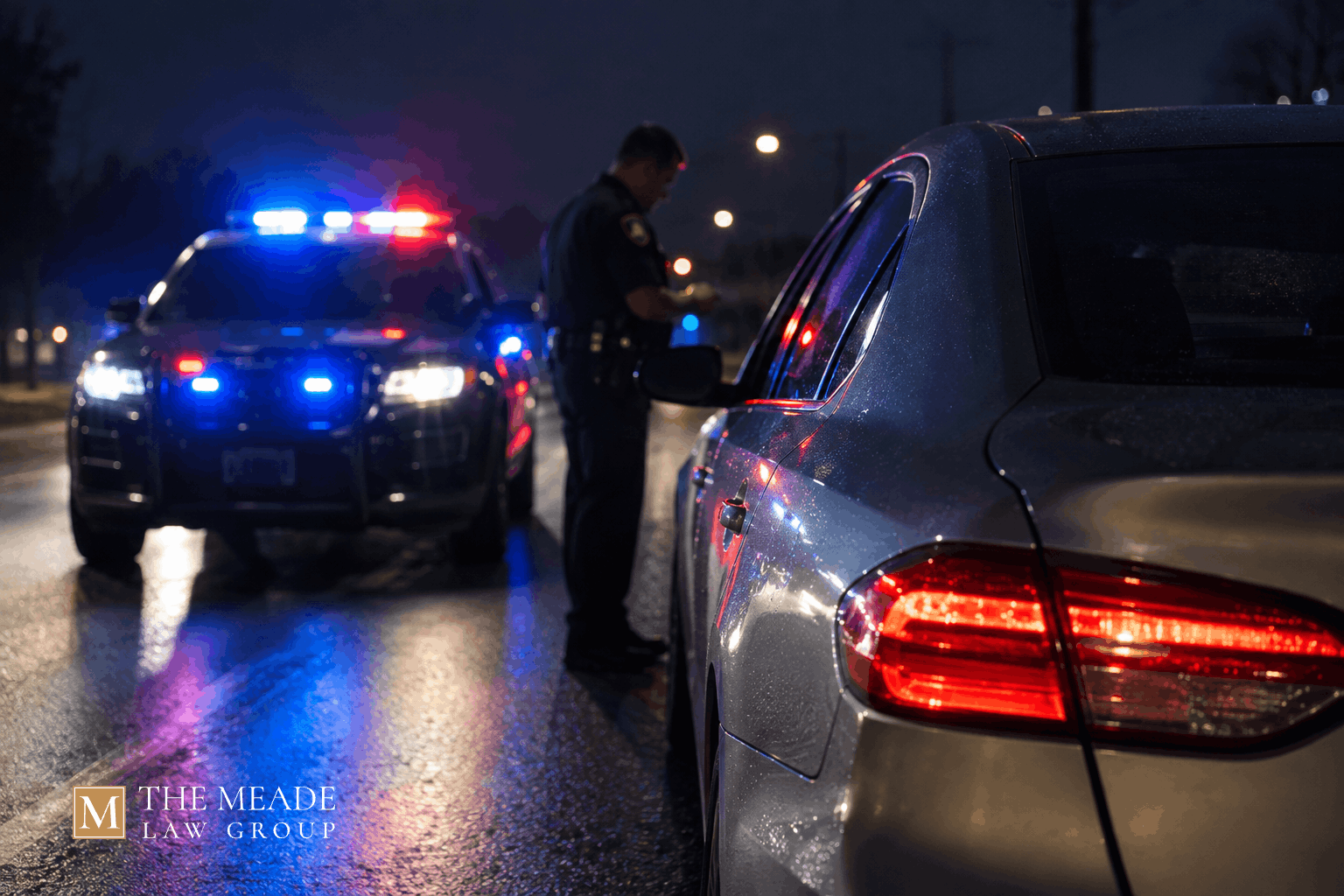
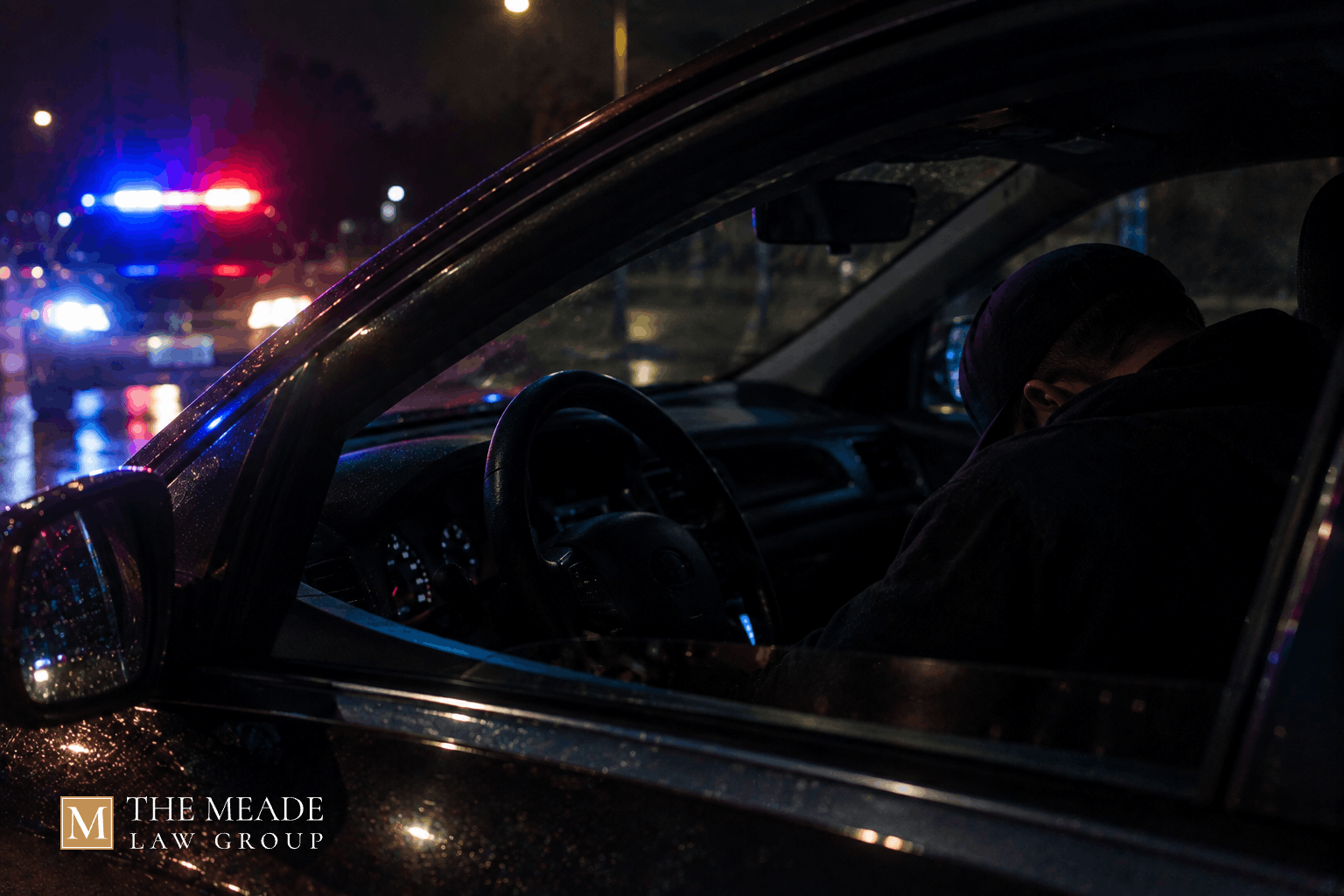
You did what felt responsible. Too impaired to drive, you got into your car to sleep it off, to wait for a ride, or just to stay warm. Then came a tap on the window, a round of questions, and handcuffs.
For a lot of Ohio drivers, that is the confusing and frightening start of a physical control charge. The hardest part to accept is that you can be convicted even though you never moved the car an inch.
If you are facing a physical control charge in Ohio, knowing what the state actually has to prove, how the penalties compare to an OVI, and where the defenses lie can change how the whole case ends.
What Is a Physical Control Charge in Ohio?
Physical control is defined in ORC 4511.194. The law makes it a crime to be in physical control of a vehicle while under the influence of alcohol or drugs, or with a prohibited concentration in your system. The important word is control, not movement. Unlike an OVI, this charge does not require the state to prove you were driving.
What “Actual Physical Control” Means
Ohio gives the term a specific meaning that traces back to the 1976 Ohio Supreme Court case Cincinnati v. Kelley. Actual physical control means being in the driver’s position of the front seat while having possession of the ignition key or another ignition device.
That definition is narrow on purpose, and it is often where a case is won or lost. Where you were sitting and where the keys were can matter more than anything else in the police report.
The Two Things the State Must Prove
Stripped down, the charge rests on two facts, both of which the prosecutor has to establish:
- Position: You were in the driver’s position of the front seat.
- Possession: You had the ignition key or ignition device in your possession.
Add impairment or a prohibited test result, and the offense is complete. Take either of the first two facts away, and the case becomes far harder to prove. Someone asleep in the back seat, or with the keys locked in the trunk, stands in a very different legal position than someone behind the wheel with keys in hand.
You Do Not Have to Be Driving
This is the part that catches people off guard. Because movement is not required, the charge often lands on drivers who were actively trying to avoid driving. Situations that commonly lead to a physical control charge include:
- Sleeping in the driver’s seat with the keys in a pocket or the cupholder.
- Sitting in a running car to stay warm while parked.
- Waiting in the driver’s seat for a sober friend to arrive.
- Pulling over to rest after realizing you were too impaired to keep going.
The irony is hard to miss. The safer decision not to drive is often the very thing that creates the charge.
Is Physical Control a Criminal Offense or Just a Ticket?
Physical control is not a minor traffic ticket. It is a first-degree misdemeanor, the most serious misdemeanor level in Ohio, which means it can carry jail time and leave a permanent criminal record.
At the same time, it is not an OVI. It is a separate and generally less severe charge, and that distinction is exactly why it matters so much to your license and your record.
Penalties for Physical Control in Ohio
As a first-degree misdemeanor, physical control carries real consequences, but they differ from an OVI conviction in ways that work in your favor.
Jail, Fines, and License Suspension
A conviction can bring up to six months in jail and a fine of up to $1,000, plus court costs. The court may also impose a license suspension of up to one year, along with an alcohol or drug education requirement such as a three-day driver intervention program.
Unlike an OVI, none of that jail time is a mandatory minimum, which leaves a judge room to avoid jail entirely depending on the facts and your record.
No Points and Other Key Differences
Three features make physical control meaningfully lighter than an OVI, and they are the reasons the charge exists as an alternative at all:
- No license points. A physical control conviction adds zero points to your Ohio driving record, compared with six for an OVI and four for reckless operation.
- No mandatory jail. There is no required minimum sentence, unlike the mandatory three days that come with a first OVI.
- Not a prior OVI. A physical control conviction does not count as a prior OVI, so it will not raise the mandatory penalties if you are ever charged with an OVI down the road.
How Physical Control Compares to OVI and Reckless Operation
Physical control, OVI, and reckless operation are easy to confuse, and drivers often find themselves charged with one when the facts really fit another. Here is how they line up.
| Charge | Core Requirement | Impairment Needed? | License Points |
| Physical control (ORC 4511.194) | In the driver’s seat with the keys, not driving | Yes | None |
| OVI (ORC 4511.19) | Operating the vehicle while impaired | Yes | 6 |
| Reckless operation (ORC 4511.20) | Driving in willful or wanton disregard for safety | No | 4 |
Both physical control and reckless operation are common results when an OVI is challenged, which leads straight to the next point.
Physical Control as a Reduction From an OVI
For many drivers, a physical control charge is not the starting point. It is the goal. When an OVI case has weaknesses, a reduction to physical control can be a strong outcome.
Why an OVI Gets Reduced to Physical Control
The reduction usually turns on a gap in the state’s proof, most often the question of operation. If officers never saw the car move and cannot prove you drove, the OVI may be vulnerable while physical control still fits the facts they can establish. Weak field sobriety results, testing problems, or a questionable stop can all push a prosecutor toward the same offer.
What You Still Give Up
A reduction is favorable, but it is not a dismissal, and it helps to stay realistic. Physical control is still a first-degree misdemeanor that stays on your criminal record; it can still carry jail time and a suspension, and it generally cannot be sealed in Ohio because it is treated alongside traffic and OVI offenses. The benefit is in the lighter penalties and the clean points record, not in erasing the case.
Defending Against a Physical Control Charge in Ohio
Because the offense depends on narrow, specific facts, physical control is often very defensible. A strong defense targets whichever element is weakest:
- Challenging actual physical control: Showing that you were not in the driver’s seat, or did not have possession of the keys, which strikes at the heart of the charge.
- Attacking the stop and the evidence: Questioning whether officers had a lawful basis to approach, and whether the field sobriety tests and chemical testing were handled correctly.
- Disputing impairment: Raising medical conditions, fatigue, or other explanations for what an officer read as intoxication.
- Negotiating the outcome: Pursuing a further reduction or a dismissal where the state’s proof is thin.
What to Do If You’re Charged With Physical Control
The details you preserve early can decide how much room your defense has later. If you are charged, protect yourself with a few simple steps:
- Do not explain or admit anything. You are not required to tell officers where you were sitting or where your keys were before you speak with a lawyer.
- Write down exactly where you were. Note whether you were in the front or back seat and where the keys actually were, while it is fresh.
- Identify witnesses. Anyone who saw where you were or what you were doing may matter later.
- Save any evidence. Photos, messages arranging a ride, or receipts can all support your account.
- Talk to a criminal defense attorney before your court date. A short consultation can show whether the charge is beatable or reducible before you enter any plea.
Why Choose The Meade Law Group
A physical control charge is easy to misread, both by drivers who assume it is minor and by those who assume a conviction is certain. At The Meade Law Group, we focus on the two facts the state has to prove – your position in the vehicle and possession of the keys, and on whether the impairment evidence actually holds up.
Our team handles physical control and related OVI and traffic defense throughout central Ohio, whether the goal is fighting the charge outright, protecting your license and your record, or turning an OVI into a lighter result. We build the approach around the specific facts of your stop.
Our Services Include:
- Element-by-element review: Testing whether the state can actually prove driver’s-seat position and possession of the keys.
- Evidence and stop challenges: Examining the basis for the police contact and the reliability of any testing.
- Record and license protection: Working to keep your record clean and to limit or avoid a suspension.
- Charge negotiation: Seeking a reduction or a dismissal when the proof is weak.
Contact The Meade Law Group to schedule a confidential consultation.
Frequently Asked Questions (FAQs)
| Question | Answer |
| Can I be charged with physical control if the engine was off? | Yes. The car does not need to be running. Being in the driver’s seat while in possession of the key or ignition device is enough, even with the engine off. |
| Will a physical control charge raise my car insurance? | Usually. Insurers treat an alcohol-related offense as high risk and often raise premiums, even though the conviction itself carries no license points. |
| Does a physical control charge affect a commercial driver’s license (CDL)? | Yes. Commercial drivers are held to stricter standards, and an alcohol-related conviction can put a CDL at risk even when the driver was in a personal vehicle. |
| What happens if I refuse a breath test during a physical control stop? | Ohio’s implied-consent law still applies, so a refusal can trigger an administrative license suspension that runs separately from the criminal charge. |
| Can I be charged with physical control on private property, like my own driveway? | Yes. The offense is not limited to public roads, so being in control of a vehicle while impaired can lead to a charge even on private property. |