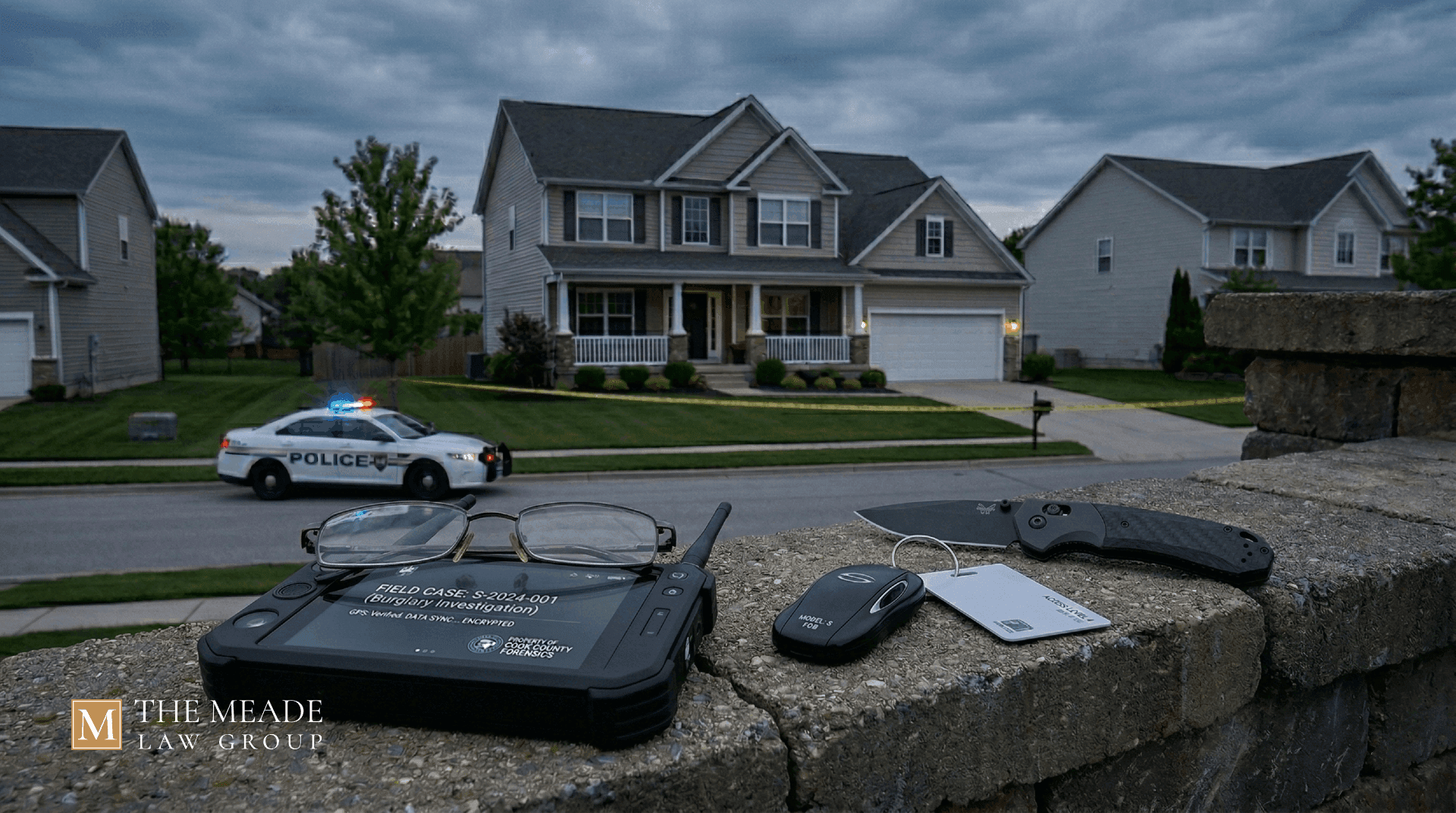

A split-second decision to protect yourself or your family can quickly lead to a complex and stressful police investigation. When law enforcement officers arrive at a chaotic scene, they often make quick arrests to secure the area. This can leave you facing serious criminal charges for an act you believed was entirely justified, creating immediate worry about your freedom, reputation, and future.
The Ohio criminal justice system moves fast, and prosecutors begin evaluating evidence right away. Many people mistakenly believe that simply explaining their side of the story to the police will clear things up. In reality, statements made under extreme stress are easily misinterpreted and can be used against you in court, complicating your case.
Navigating this situation requires a clear understanding of the specific laws that apply to your case. Knowing how Ohio courts evaluate use-of-force incidents, what rights you have to stand your ground, and how the burden of proof operates is essential for protecting your rights. A careful, fact-based look at these laws will help you and your legal counsel build a strong defense.
Understanding Self-Defense Laws in Ohio
In the legal system, a self-defense claim means you acknowledge using force but argue your actions were legally justified to protect yourself from an unprovoked threat. Traditionally, this is known as an “affirmative defense.” It simply means your defense team will point to evidence showing that your use of force was a necessary response to immediate danger.
Recent changes to Ohio law have clarified how self-defense claims are evaluated and expanded certain protections in specific situations. The state recognizes your right to use appropriate force to stop an attack. However, this does not mean every use of force is automatically justified. Successfully raising this defense requires meeting specific legal standards, and the unique facts of your case will determine if your actions were lawful.
When Self-Defense May Be Legally Justified in Ohio
Claiming self-defense does not automatically prevent an arrest or stop a criminal prosecution. To rely on this legal protection, the specific circumstances of the incident must align closely with statutory requirements. The law evaluates your mindset at the time of the event and what appeared necessary under the circumstances.
To establish self-defense, the situation generally must involve:
- A threat of immediate, imminent danger.
- A reasonable belief that force is necessary to protect yourself.
- A proportionate use of force in response to the threat.
Reasonable Fear of Immediate Harm
To justify using force, you must have a genuine and reasonable belief that you are in immediate danger of physical harm. The threat must be imminent, meaning it is happening right now or is about to happen. You cannot claim self-defense against a vague future threat or use force to retaliate for a past dispute.
Furthermore, the court evaluates this fear based on the exact circumstances you faced at that moment. The question is whether an ordinary person, standing in your shoes and seeing what you saw, would have felt the same level of danger and believed force was necessary.
Using Only the Force Reasonably Necessary
A critical component of Ohio self-defense law is the concept of proportionality. The law requires that the amount of force you use must be reasonably proportionate to the threat you are facing.
- Non-deadly force: If someone threatens to push or strike you, you are generally only justified in using non-deadly force to stop the attack.
- Deadly force: You are only justified in using deadly force, such as firing a weapon, if you have a reasonable fear of imminent death or serious physical harm.
Using a deadly weapon against a minor physical threat will typically defeat a self-defense claim and lead to serious criminal charges.
Stand Your Ground and Castle Doctrine in Ohio
Ohio law provides two distinct but related legal frameworks that address when and where you can use force without first trying to retreat. The following table highlights the core differences between these protections before exploring how they work in practice.
| Legal Concept | Where It Applies | Main Protection | Important Limitation |
| Stand Your Ground | Any place you lawfully have a right to be | No legal duty to retreat before using lawful defensive force | Use of force must still be reasonable and proportionate |
| Castle Doctrine | Your home, temporary residence, or occupied vehicle | Creates a rebuttable presumption that you acted in self-defense | Does not apply if you are trespassing or the other person has a legal right to be there |
No Duty to Retreat in Ohio
Ohio operates as a “Stand Your Ground” jurisdiction. In practical terms, this removes the legal requirement to attempt an escape before using lawful defensive force against an imminent threat.
- Lawful presence requirement: You cannot claim this protection if you are trespassing or committing a crime in the location where the incident occurs.
- Evidentiary protection: A judge or jury is prohibited from considering your failure to retreat as evidence that your use of force was unjustified.
- Proportionality remains: Removing the duty to retreat does not change the rules of engagement; you cannot use more force than reasonably necessary to stop the threat.
Self-Defense in a Home or Vehicle
The Castle Doctrine provides a separate, elevated tier of legal protection for incidents that occur inside your home, a temporary residence, or an occupied vehicle. If someone unlawfully enters one of these specific spaces, Ohio law shifts the initial legal assumptions in your favor.
- Legal presumption: Ohio law initially presumes you acted with a reasonable fear of imminent death or serious physical harm after an unlawful entry.
- Burden on the state: Because of that presumption, the prosecution must present evidence strong enough to overcome it.
- Statutory exceptions: This protection may not apply if you were not lawfully present or if the other person had a lawful right to be there.
Can You Defend Another Person Under Ohio Law
Yes, Ohio law allows you to use force to protect someone else from an imminent attack. This legal concept is known as the defense of others.
When you intervene to protect another person, you essentially step into their legal shoes. If the person you are protecting would be legally justified in using self-defense, you are generally justified in using that same level of force to protect them.
The same rules regarding reasonable belief, immediate danger, and proportionate force still apply to your actions. You must genuinely believe the other person is in danger. Additionally, if you use deadly force to stop a minor scuffle or if the person you are defending actually started the fight, your legal protections may be severely limited.
How Self-Defense Claims Are Evaluated in Ohio Cases
When you raise a claim, the court and prosecutors evaluate the entire context of the event. They look closely at the specific evidence to determine if your actions align with the legal standards for justification.
The evidence used to evaluate these claims often includes:
- Witness statements: Accounts from bystanders that confirm or contradict who started the altercation.
- 911 calls: Recordings that capture the urgency of the moment and the initial reports of the incident.
- Surveillance footage: Video from security cameras or cell phones that shows the exact sequence of events.
- Physical evidence: Injuries, weapons recovered at the scene, and forensic data that support the use of proportionate force.
- Timing and consistency: Whether your version of events remains consistent and aligns with the physical evidence over time.
Burden of Proof in a Self-Defense Case
One of the most important aspects of Ohio law is how the burden of proof is handled under ORC 2901.05. The law clearly outlines the roles for both the defense and the prosecution.
First, the defense must introduce evidence tending to support that the accused acted in self-defense, defense of another, or defense of a residence. You do not have to prove you acted in self-defense beyond a reasonable doubt, but you must raise the issue with supporting facts.
Once that evidence is introduced, the burden shifts entirely to the prosecution. The state must then prove beyond a reasonable doubt that you did not act lawfully in self-defense. If they cannot meet that high burden, you must be acquitted.
What Can Weaken or Defeat a Self-Defense Claim
Even in a state with strong self-defense laws, certain actions can severely weaken your ability to claim legal justification. Understanding these limitations is critical for evaluating the strength of your case.
A self-defense claim may be weakened or defeated if the evidence shows:
- Initial aggression: You generally cannot start a physical fight and then claim self-defense when the other person fights back, unless you clearly attempt to withdraw first.
- Escalation of force: You cannot respond to a minor physical threat by introducing a deadly weapon into the situation.
- Continuing after the threat ends: If the attacker retreats or is incapacitated, the immediate danger is over. You cannot continue to use force for retaliation.
- Unlawful presence: Your legal protections, such as the right to stand your ground and Castle Doctrine presumptions, may be limited or invalidated if you are trespassing or otherwise lack a lawful right to be in the location at the time of the incident.
What to Do After a Self-Defense Incident in Ohio
The moments following a physical altercation are legally sensitive. Taking the right practical steps immediately is essential for protecting your rights and preserving critical evidence.
- Call for help: Contact 911 to report the incident and request medical assistance if necessary.
- Remain silent: Provide your identification to the police, but decline to give a detailed statement or answer investigative questions without your lawyer present.
- Do not alter the scene: Leave evidence exactly where it is. Do not move items, hide weapons, or attempt to clean up the area.
- Preserve digital evidence: Secure any home security footage, doorbell camera video, or cell phone recordings of the incident before they are deleted.
- Contact a defense attorney: Secure legal counsel quickly to protect your rights, manage communications with law enforcement, and avoid harmful statements.
Why Choose The Meade Law Group
Facing criminal charges after defending yourself requires a serious, legally precise defense strategy. At The Meade Law Group, we understand the complexities of Ohio self-defense laws and focus on protecting your rights from the earliest stages of an investigation.
We provide clear, practical guidance during the critical window when police investigate an incident, and prosecutors make charging decisions. Our team reviews the evidence to build a strong foundation for your defense, ensuring that your actions are evaluated accurately under the law.
Our Services Include:
- Early Case Review: Analyzing the initial police reports, 911 calls, and witness statements to establish the foundation for a self-defense claim.
- Police Investigation Support: Managing communications with law enforcement to protect you from making statements that could harm your case.
- Evidence Review and Preservation: Securing critical surveillance footage, medical records, and physical evidence to support your version of events.
- Pretrial Motion Practice: Filing strategic motions to challenge the prosecution’s evidence and assert your statutory rights under Ohio law.
Contact The Meade Law Group to schedule a confidential consultation.
Frequently Asked Questions (FAQs)
| Question | Answer |
| Is self-defense a guaranteed way to avoid arrest? | No. Police often arrest individuals at the scene to secure the area and conduct an investigation. Establishing self-defense is a legal process that happens during the investigation or in court. |
| Can I use deadly force to protect my property? | Generally, no. Under Ohio law, deadly force is reserved for protecting human life from imminent death or serious physical harm. You cannot legally use a deadly weapon solely to protect an empty car or physical property. |
| Does Stand Your Ground apply everywhere in Ohio? | It applies in places where you lawfully have a right to be. However, the law still requires your use of force to be reasonable and proportionate to the threat you face. |
| What happens if I start the argument? | If you are the initial physical aggressor, you generally lose the right to claim self-defense. An exception may apply if you clearly withdraw from the fight and the other person continues the attack. |
| Who has to prove it was self-defense in court? | The defense must first introduce evidence showing that self-defense applies. Once that is done, the prosecution must prove beyond a reasonable doubt that your actions were not lawful self-defense. |
| Will I lose my gun rights if I am charged? | A conviction can have serious consequences for your firearm rights under both Ohio and federal law, depending on the specific offense. A successful self-defense claim helps prevent a conviction and protects your legal rights. |