Deciding to end a marriage is a profound and often exhausting realization. For most people, it follows months or even years of careful thought, followed by the difficult shift from emotional processing to practical planning. The period right before filing is a critical window where preparation can shape everything that follows.
Preparing for a divorce in a high-volume urban jurisdiction requires more than downloading forms or relying on internet advice. The local court system handles thousands of cases each year, so incomplete paperwork, missing financial records, or disorganized parenting proposals can quickly slow your progress. Judges and magistrates expect clarity from the very first filing.
Gathering your financial records and outlining your custody goals early helps prevent confusion and costly delays. Knowing what to expect with local court procedures, temporary support, and household budgets allows you to make better decisions from the start. A structured checklist helps you stay organized and ready before your case is filed.
If you want a broader overview of the divorce process before focusing on county-specific preparation, review our Ohio Divorce Checklist.
Why Divorce Preparation Looks Different in the Columbus Area
The volume of cases moving through the Columbus-area legal system means magistrates and judges have limited time to sort through disorganized filings. If your financial disclosures are incomplete or your parenting proposals lack detail, your case can quickly stall. Entering this environment without a clear filing plan can lead to avoidable delays and frustration.
The capital region’s economy also brings more complex asset structures into many separations. From government retirement plans to rapidly appreciating suburban real estate, these issues require targeted preparation in a crowded court system. Knowing what local courts expect helps reduce unnecessary legal fees and keeps the filing process moving.
Franklin County Court Basics and Filing Logistics
Before gathering your financial documents, it is important to understand the logistical realities of the Franklin County court process. Knowing where your case will be heard and what the initial requirements entail helps you manage your timeline and expectations.
Court Location and Venue Requirements
All divorce, dissolution, and legal separation cases for this area are handled by the Domestic Relations Court. The court is part of the Court of Common Pleas and is located at 373 South High Street, 4th Floor, Columbus, OH 43215.
To establish venue here, you must meet strict residency requirements:
- State Residency: You or your spouse must have been a resident of the state for at least six months.
- County Residency: You or your spouse must have been a resident of this specific county for at least 90 days immediately before filing.
Filing Costs and Data Protection
Initiating a case requires paying baseline court costs, which are subject to change. Always confirm the exact, current amounts through the local Clerk of Courts before submitting your paperwork.
- Divorce Filing Fee: Currently $275.
- Dissolution Filing Fee: Currently $225.
- Service Costs: Additional fees apply for certified mail (typically around $10) or formal personal service.
- Privacy Compliance: The court requires a Confidential Disclosure of Personal Identifiers form to keep sensitive data protected from the public record.
Expected Timelines and Court Congestion
Case timelines depend on both the complexity of the issues involved and the number of matters already moving through the court. While some cases proceed efficiently, others take longer when the court must resolve disputes before a final decree can be entered.
- Uncontested Cases: A dissolution or uncontested divorce might be finalized in approximately 3 to 6 months.
- Contested Cases: Disputes involving child custody, business valuations, or hidden assets can take 9 to 12 months or longer due to the mandatory discovery process and court congestion.
What to Gather Before Initiating Your Case
A smoother filing process begins with intensive document gathering. Relying on estimates or memory is dangerous when negotiating property division or support in a high-stakes environment. You must secure hard evidence of your financial reality before filing.
Having these records organized early allows your attorney to draft accurate initial disclosures, support your requests for temporary financial relief, and anchor your case in realistic negotiations from day one.
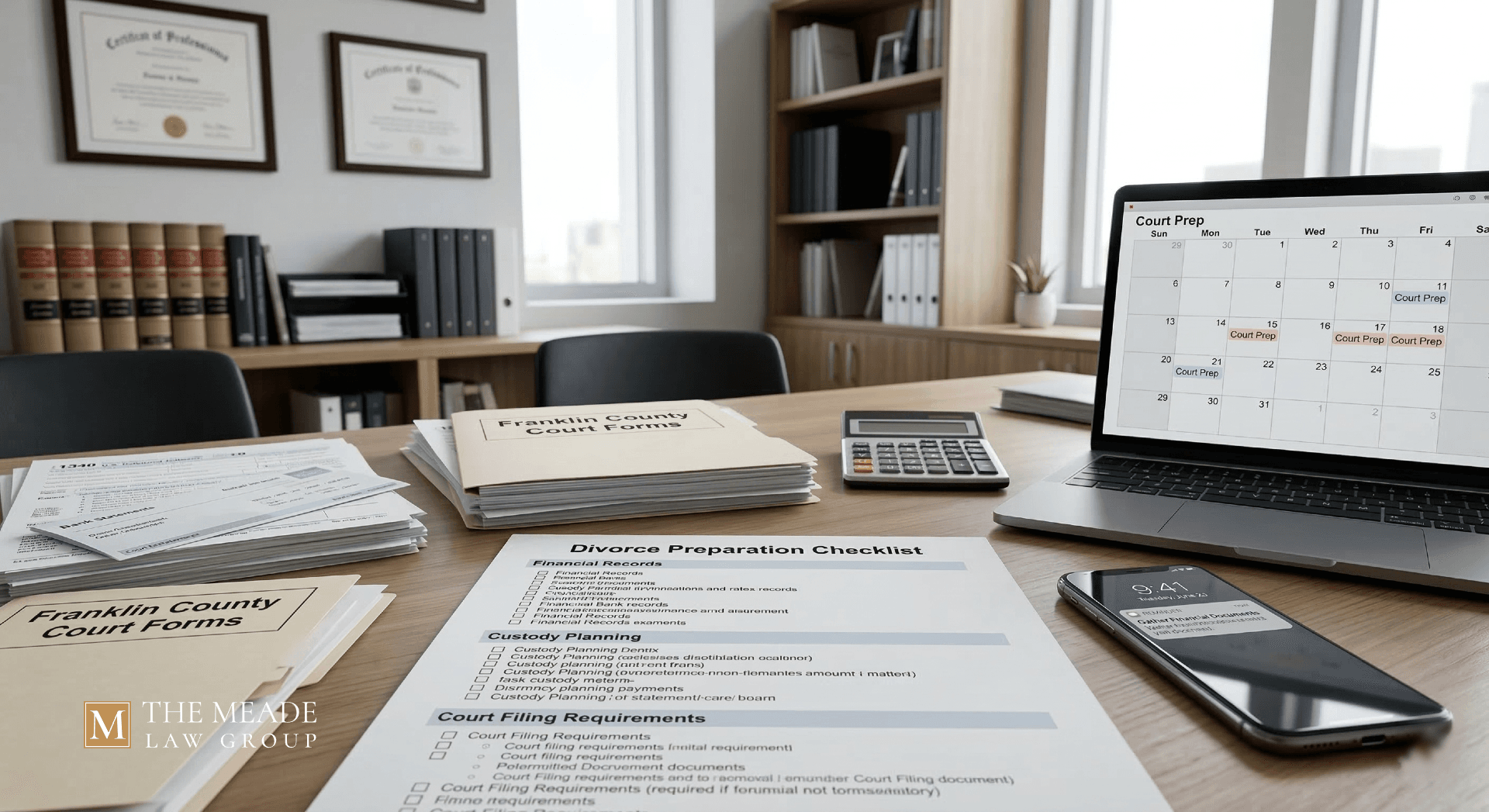
Your preparation checklist should focus on obtaining these essential records:
- Public Employee Pensions: Secure OPERS or STRS statements and plan documents to prepare for specialized division rules.
- Metro-Area Real Estate Records: Obtain recent appraisals, mortgage statements, and tax assessments for primary residences or investment properties.
- Urban Business Income: Gather corporate tax returns, operating agreements, and profit and loss statements for privately held businesses.
- Household Budget Records: Compile utility bills and child-related expenses necessary for temporary support requests.
- Standard Financial Statements: Collect recent tax returns, W-2s, 1099s, and statements for all checking, savings, and brokerage accounts.
Property, Housing, and Financial Planning Across the Metro Area
The Columbus-area housing market heavily influences your preparation. With rising housing pressures and shifting property values across the region, decisions about the marital home are often the most pressing financial concern for separating couples.
Because real estate markets vary significantly across the region, a targeted approach is necessary. The location of your property often dictates your primary planning focus before filing:
| Area | Common Planning Concern | Why It Matters Before Filing |
| Columbus | Housing pressure and liquidity | Affects decisions about whether retaining the primary home is financially realistic. |
| Grove City and Hilliard | Home equity and long-term investments | Impact valuation methods and the strategy for dividing appreciating assets safely. |
| Westerville and Dublin | Higher incomes and school continuity | Influences spousal support planning and the logistics of shared parenting schedules. |
Parenting Preparation and Scheduling Logistics
If you have minor children, local judges expect parents to present practical, well-thought-out parenting plans from the outset. Your preparation should involve tracking the logistical details of your children’s lives so your attorney can construct a realistic schedule.
Parents should organize the following before filing:
- School and Commute Logistics: Document daily travel realities across busy corridors like I-270 or downtown.
- Parenting Time Logs: Track school drop-offs, medical appointments, and extracurricular activities.
- Child Expense Tracking: Organize receipts for daycare, sports, and tutoring to calculate accurate support needs.
The Required Parenting Seminar and GAL Involvement
The local court requires all divorcing parents with minor children to complete a specialized educational program called the “Putting the Children First” seminar, typically administered by Action for Children. Completing this early demonstrates compliance with the judge.
In highly contested custody situations, the court may appoint a Guardian ad Litem (GAL) to independently investigate the family dynamic and make recommendations based on the child’s best interests.
Why Temporary Orders Matter More in a Busy Urban Court
In a high-volume court system, it can take several months to reach a final resolution. During this waiting period, mortgages must be paid, children need support, and daily expenses accrue. This is why temporary orders are a critical part of organizing your financial and parenting records early.
Given local housing instability and high rental costs in the metro area, securing temporary relief and residential stability immediately upon filing is a vital protective measure. You must gather your household budget data beforehand so your attorney can request sustainable financial orders without delay.
Business Owners, Public Employees, and Complex Assets
The capital region economy is driven by a unique mix of state government institutions, major universities, and private enterprises. Because of this economic diversity, local cases frequently involve highly specific asset types that require early professional valuation.
Unwinding a local business or dividing a state pension requires more time, records, and legal precision than dividing a standard joint account. Preparing these documents before filing allows your attorney to begin the necessary valuation work early:
- OPERS and STRS Pensions: State pensions are subject to strict rules requiring precise legal mechanisms for division.
- Urban Business Valuation: Differentiating between enterprise value and personal goodwill requires early corporate document collection.
Practical Local Issues People Overlook Before Filing
When focusing on major legal hurdles, it is easy to overlook the everyday logistical issues that can derail your preparation. Organizing your personal life and anticipating court day mechanics will significantly reduce your stress.
Before you file, consider these practical action points:
- Downtown Court Access: Map out parking availability and security procedures at the High Street complex.
- Form Accuracy: Verify all paperwork matches current local rules to prevent rejection by the clerk.
- Digital Privacy: Secure your personal email and monitor shared cloud accounts to protect attorney communications.
- Shared Accounts: Open a separate bank account to ensure access to liquid funds for daily expenses.
Examples of Filing Preparation in Franklin County
To understand how preparation translates to real life, reviewing different local scenarios helps highlight common challenges and the practical lessons they offer.
Grove City Home Equity Challenge
- Issue: A long-held home had become the couple’s largest asset because of market appreciation.
- Preparation Focus: The filing spouse obtained an early appraisal and reviewed the potential tax impact of a sale.
- Why It Mattered: That analysis helped clarify whether a buyout or sale made more financial sense before filing.
Public Employee Temporary Support Case
- Issue: A state employee faced separation while relying on one salary and a future OPERS interest.
- Preparation Focus: Pension records were gathered, and a detailed household budget was prepared.
- Why It Mattered: That documentation supported an early request for temporary financial relief while the case was pending.
Westerville Parenting Logistics Case
- Issue: Work travel and changing weekly routines made parenting time difficult to structure.
- Preparation Focus: The preparing spouse tracked actual parenting time and documented child-related activity costs.
- Why It Mattered: This gave counsel a stronger foundation for building a realistic parenting proposal.
Why Choose The Meade Law Group
Preparing for a divorce filing in Franklin County requires more than gathering paperwork. Issues involving temporary support, parenting schedules, housing costs, and retirement benefits should be addressed before the case is filed, so early hearings are not shaped by incomplete information.
At The Meade Law Group, we help clients prepare for filing in a way that matches the practical demands of the domestic relations court. That includes organizing financial records, reviewing pension and property issues, and building a case strategy that is ready for immediate questions about support, parenting, and possession of the home.
Our Services Include:
- Pre-Filing Strategy: We help you organize the necessary documentation and make tactical decisions before initiating your case.
- Financial Record Review: We evaluate real estate, retirement portfolios, and business income to prepare accurate property division requests.
- Temporary Orders: We file the necessary requests to secure reliable child support, spousal support, and exclusive home occupancy.
- Representation for Disputes: We provide clear legal guidance to resolve contested custody conflicts and complex asset division challenges.
Contact The Meade Law Group to schedule a confidential consultation.
Frequently Asked Questions (FAQ)
| Question | Answer |
| How long does a divorce typically take in this county? | Timelines vary based on complexity. An uncontested case may resolve in 3 to 6 months, while contested cases involving complex assets or custody disputes typically take 9 to 12 months or longer due to local court volume. |
| Do I need to live in the local area before filing here? | Yes. You or your spouse must be a resident of the state for six months, and a resident of this specific county for at least 90 days immediately before filing your complaint. |
| What is the current filing fee for a divorce? | The base filing fee for a divorce is currently $275, while a dissolution is $225. Additional fees will apply for certified mail or formal sheriff service. |
| What is the Putting the Children First seminar? | It is a mandatory educational program for all divorcing parents with minor children in the local court system, designed to help minimize the impact of the transition on kids. |
| What should I do if my spouse has an OPERS or STRS pension? | You must gather the most recent pension statements and plan documents early. Dividing public pensions requires highly specific legal orders, and standard private retirement rules do not apply. |
| What records should I gather before filing? | You need a comprehensive financial profile, including recent pay stubs, several years of tax returns, bank and investment statements, mortgage documents, debt records, and relevant business tax returns. |