When a marriage ends, the sudden volume of decisions can paralyze even the most organized person. You may feel overwhelmed by competing priorities, unsure whether to focus first on the mortgage, the children’s school schedule, or shared bank accounts. Many people are unsure of where to begin.
Trying to solve every complex issue at once often leads to mistakes. In the early stage, the most important step is not resolving every final question. It is identifying what needs immediate attention, separating urgent problems from long-term negotiations, and gathering facts before asking a judge to intervene.
That approach becomes even more important when a household includes multiple moving parts, such as real estate, parenting logistics, shared debt, or uneven income. A structured review of your immediate situation can make the next phase of the process more stable and far easier to manage.
For a broader look at the steps involved in preparing for divorce anywhere in the state, review our Ohio Divorce Checklist.
Why Early Organization Matters in Fairfield County
In Fairfield County, divorces often unfold across a mix of suburban growth and long-established rural communities. Whether you are commuting from Pickerington, maintaining a household in Lancaster, or managing property near Baltimore, the details of daily life can dictate what needs attention first.
The challenges facing one household may look very different from those facing another. A family dividing a higher-value suburban home may need to focus on housing costs and cash flow, while another may need to address inherited acreage, farmland, or a locally owned business.
What to Address First Before Filing for Divorce
Effective planning requires separating urgent household concerns from long-term financial goals. Taking time to address the realities of the next few months helps maintain stability and creates a much stronger foundation for the case.
Urgent Needs Versus Long-Term Decisions
A common mistake during a separation is attempting to resolve the final property settlement before securing basic living arrangements. When individuals focus entirely on the final decree, they often neglect how next month’s bills will be paid or where the children will sleep next week.
Before turning your attention to the final division of assets, you should evaluate these immediate logistical priorities:
- Housing logistics: Decide whether it is realistic or safe for both spouses to remain in the marital home temporarily, or if alternative housing is needed.
- Urgent household expenses: Determine how shared bills, utilities, and groceries will be paid over the coming months.
- Childcare and parenting continuity: Clarify how school transportation, daily care, and consistent routines will be managed in the short term.
- Access to funds: Ensure you have reliable access to liquid funds for daily needs without improperly depleting joint accounts.
Financial Records and Property Issues to Address Early
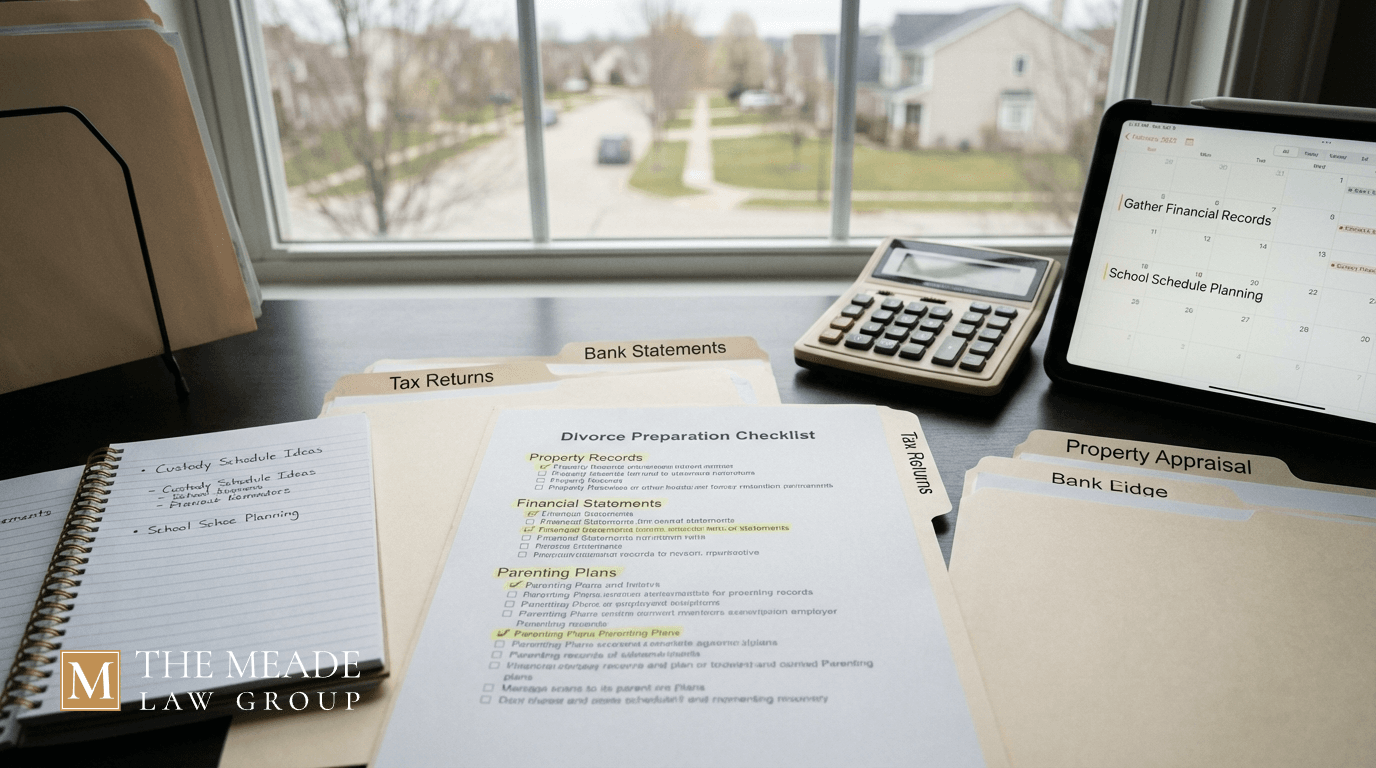
Securing a fair settlement requires hard proof of your financial reality. Gathering your financial records ahead of time gives your attorney the exact information needed to spot potential complications. In a region with diverse property types, having your documents in order is vital for valuing real estate and distinguishing between joint and individual assets.
Gathering Essential Financial Documents
Begin building a secure file with the following items to ensure your financial picture is complete:
- Income records: Collect recent pay stubs, W-2 forms, and 1099s for both spouses.
- Tax returns: Locate state and federal tax filings for the past three to five years.
- Banking details: Secure statements for all checking, savings, and investment accounts.
- Debt statements: Print out current balances for mortgages, auto loans, and credit cards.
- Retirement accounts: Gather statements for 401(k) plans, IRAs, and any public pensions.
Acreage, Farms, and Separate Property Issues
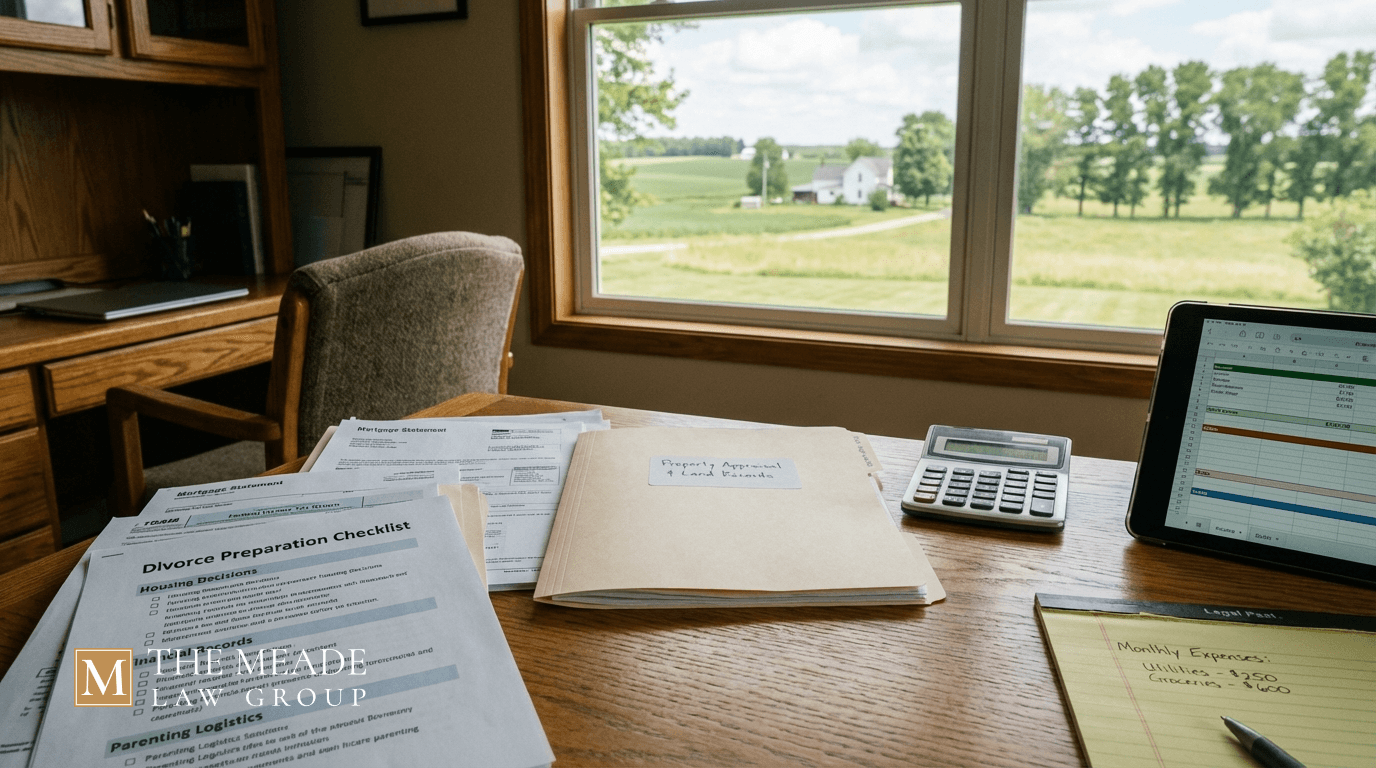
If you own rural acreage, a working farm, or mixed-use property, an early professional appraisal can prevent significant valuation disputes later. If you hold inherited family land, gathering the historical documents needed to trace and protect it as separate property is a priority.
Additionally, because many residents commute to the Columbus area for public-sector jobs, OPERS and STRS pensions are common. These retirement accounts require specific legal orders for proper division, making upfront documentation critical.
Parenting and Schedule Planning Before the Case Starts
When children are involved, their stability must remain the primary focus. Judges generally expect parents to propose workable, highly detailed arrangements. Your planning should reflect the actual daily rhythms of your household.
Commuting distances, rural routes, and school district boundaries significantly impact how a parenting plan operates across different parts of the county. To build a realistic proposal, start documenting these daily logistics:
- Travel and commute times: Calculate the actual driving times between homes, schools, and workplaces.
- Extracurricular schedules: List the times, locations, and financial costs of your children’s sports or clubs.
- Medical and therapy needs: Document ongoing healthcare appointments and clarify who typically manages them.
Temporary Orders and Short-Term Financial Stability
The legal process takes time, and your financial obligations will not pause while you wait for a final decree. Planning for short-term financial relief is a critical step in getting ready. Before you can effectively ask the court for assistance, you must have a clear picture of your financial needs.
Before requesting support, you must organize the following financial details:
- Recurring monthly expenses: Document the exact costs of utilities, insurance, and car payments.
- Housing costs: Detail the monthly mortgage or rent obligations.
- Childcare costs: Track daycare, after-school program, and tutoring expenses.
- Available income: Provide a clear accounting of current take-home pay for both spouses.
Temporary orders can establish enforceable rules for the interim period. By mapping out your household budget in advance, your attorney can request orders that address core financial responsibilities.
These may include who pays the mortgage, how temporary child support is handled, and who has exclusive use of the home. Preparing these figures before the case begins helps prevent severe financial strain during the early months of the transition.
Court Basics and Filing Logistics
Understanding the local filing rules, required documents, and likely costs helps you prepare more efficiently. Knowing exactly where your case belongs and what the clerk expects provides a clear starting point and helps you avoid unnecessary administrative roadblocks.
Court Location and Residency Requirements
All divorce, dissolution, and related domestic relations matters are managed by the Fairfield County Domestic Relations Court, which operates within the broader Court of Common Pleas. The court is located in the Hall of Justice at 224 E. Main Street, 4th Floor, Lancaster, OH 43130.
Before filing your paperwork, you must establish proper venue by meeting these residency thresholds:
- State Residency: One spouse must have been a resident of the state for at least six months before filing.
- County Residency: One spouse must have lived within the county for at least 90 days immediately before filing.
Because the region includes several rural communities and borders, residents living on the edge of the county line should carefully confirm their exact filing jurisdiction to ensure their paperwork goes to the correct courthouse.
Filing Fees and Required Forms
Starting your case requires paying standard court costs and submitting mandatory local documents. Because these financial requirements are subject to change, you should always verify the exact figures with the Clerk of Courts before turning in your paperwork.
- Divorce Filing Fee: Approximately $300 – $400.
- Dissolution Filing Fee: Approximately $250 – $350.
- Service Costs: Additional charges apply for officially serving the documents, generally around $10 for certified mail and up to $75 if sheriff service is necessary.
- Privacy Documentation: The court requires a Confidential Disclosure of Personal Identifiers form to protect sensitive personal and financial data from the public record.
Local Filing Procedures
Every courthouse has its own specific way of handling incoming cases. Relying on generic legal forms downloaded from the internet is a common mistake that can cause your filing to be delayed or rejected.
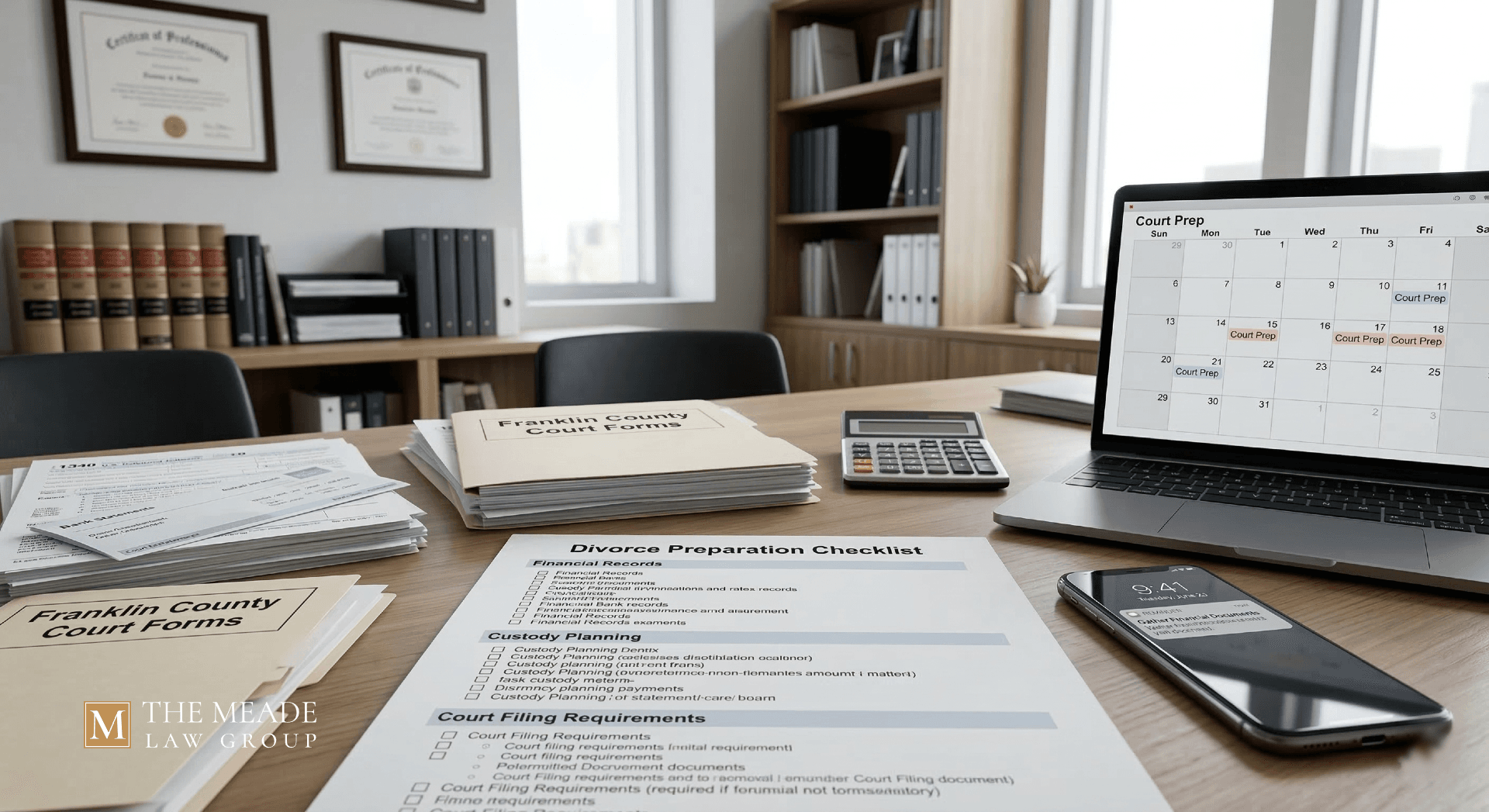
Using the correct county-specific forms is essential. You should verify all local submission rules, including any available e-filing options, before turning in your paperwork. Checking these details directly with the court helps prevent avoidable delays and keeps your case moving forward.
How Long a Divorce May Take in Fairfield County
The timeline often depends on whether the case is contested and the number of issues that need to be resolved. Matters involving children, property, or support typically take longer to resolve than cases where both parties agree on the terms. Typical timeframes may look like this:
- Uncontested matters: Cases in which both parties agree on all major terms may be resolved in roughly 4 to 6 months.
- Contested matters: Cases involving disputed custody, business valuation, support issues, or the division of rural acreage may take 12 to 18 months or longer.
These timeframes are only general estimates. Actual case duration can vary depending on court scheduling, the complexity of the issues, and how quickly financial and parenting information is organized.
Mistakes to Avoid Before Filing
In the weeks leading up to a formal filing, emotions run high, and missteps are common. Avoiding impulsive decisions is just as important as gathering the right paperwork. Prevent damage to your case by avoiding these frequent errors:
- Making large purchases: Taking on new debt or buying expensive items can complicate property division.
- Emptying joint accounts: Withdrawing large sums of money without legal guidance can violate financial boundaries and create immediate conflict.
- Venting publicly: Discussing your situation on social media provides a public record that can be used against you.
- Moving out prematurely: Leaving the marital home without legal guidance can complicate later disputes involving occupancy, parenting routines, or access to household property, depending on the facts.
Examples of Filing Preparation in Fairfield County
Looking at how different households approach this stage can clarify the process. These practical examples illustrate common regional challenges and the value of planning.
Lancaster Acreage Valuation Example
- Issue: A family owned a primary residence and several acres of adjacent land outside Lancaster, making it difficult to determine the full value of the property before filing.
- Preparation Focus: The preparing spouse obtained an early appraisal for both the home and the surrounding land.
- Why It Mattered: That step helped prevent disputes over market value and gave the case a clearer starting point for property negotiations.
Pickerington Commuter Parenting Example
- Issue: A couple living in Pickerington faced scheduling difficulties because one spouse commuted daily to Columbus, complicating school transportation and parenting time.
- Preparation Focus: The filing spouse tracked actual drive times and reviewed school district logistics before proposing a parenting schedule.
- Why It Mattered: This created a more realistic framework for shared parenting and reduced the risk of a proposal that would be difficult to follow in practice.
Why Choose The Meade Law Group
Initiating a case requires a focused approach that accounts for the procedures of the domestic relations court. Issues involving rural acreage, inherited family land, parenting schedules across different towns, and temporary housing concerns should be addressed early.
At The Meade Law Group, we help clients evaluate assets such as commuter pensions, trace separate property, and build a strategy based on verified financial information. If you are facing a transition involving children, property, support, or business interests, we invite you to contact our firm for clear legal guidance.
Our Services Include:
- Pre-Filing Strategy: Helping you map out documentation and make tactical decisions regarding housing and children before initiating your case.
- Financial Record Review: Evaluating home equity, retirement portfolios, public pensions, and business interests to prepare accurate property division requests.
- Temporary Orders Preparation: Filing the necessary requests to establish reliable child support, spousal support, and exclusive use of the home.
- Representation for Disputes: Providing focused advocacy to resolve contested parenting schedules and complex asset division challenges.
Contact The Meade Law Group to schedule a confidential consultation.
Frequently Asked Questions (FAQs)
| Question | Answer |
| How long does a divorce usually take in Fairfield County? | Timelines vary based on complexity. Uncontested cases may resolve in 3 to 6 months, while contested cases involving complex assets, land, or custody disputes can take 9 to 12 months or longer. |
| Do parents have to complete a seminar? | Yes. The local court requires divorcing parents with minor children to complete the “Putting the Children First” educational seminar. |
| What should I gather before filing if we own land or a farm? | You should collect current deeds, recent property tax assessments, mortgage statements, and consider obtaining an early professional appraisal to establish an accurate baseline value. |
| What should I avoid doing before filing? | Do not empty joint bank accounts, make large impulse purchases, incur unusual debt, or post details about your situation on social media. |
| How can early preparation help with temporary orders? | By mapping out your household budget and financial records before filing, your attorney can immediately request accurate, sustainable support and housing orders to stabilize your family while the case is pending. |